Overview
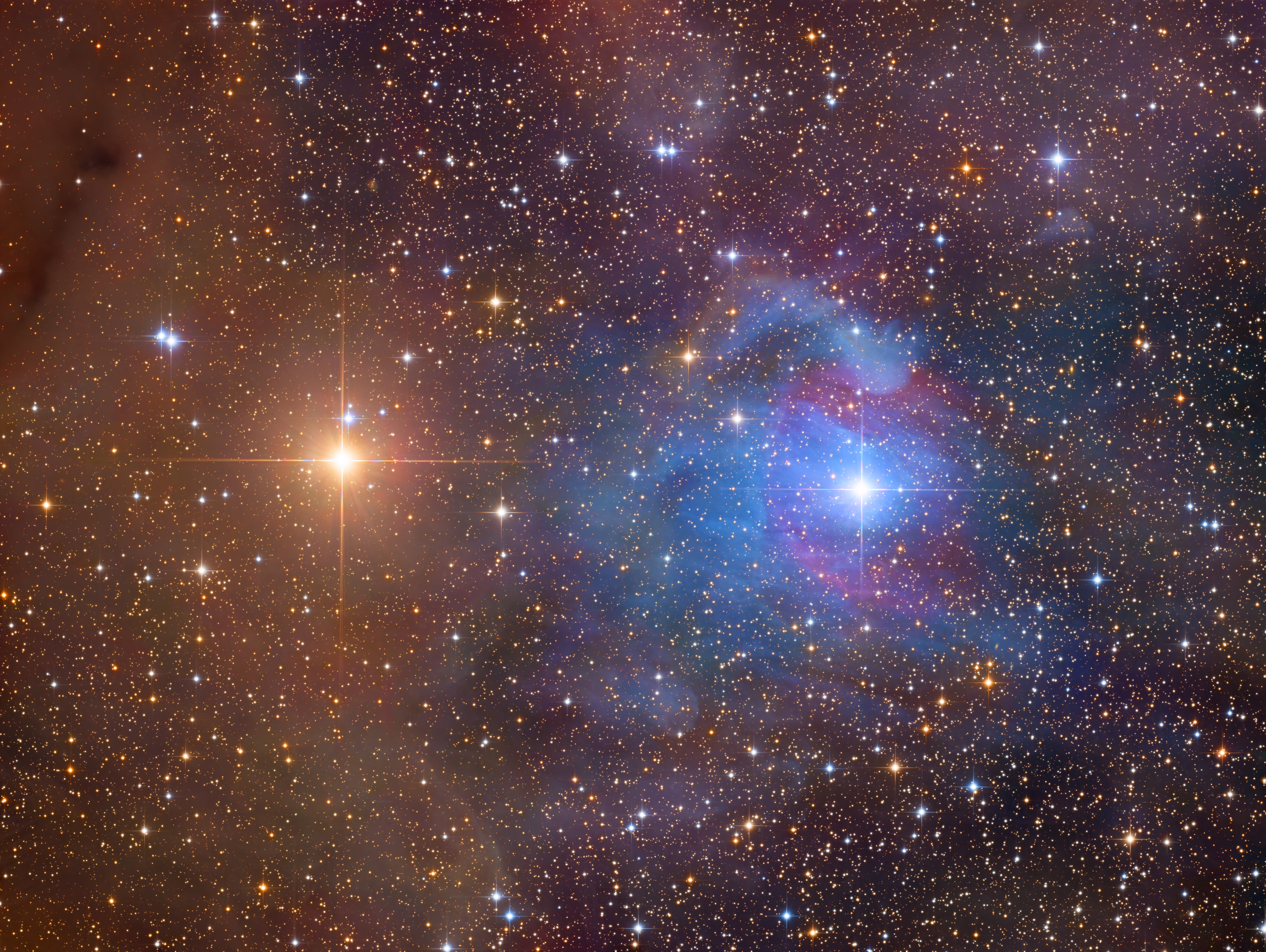
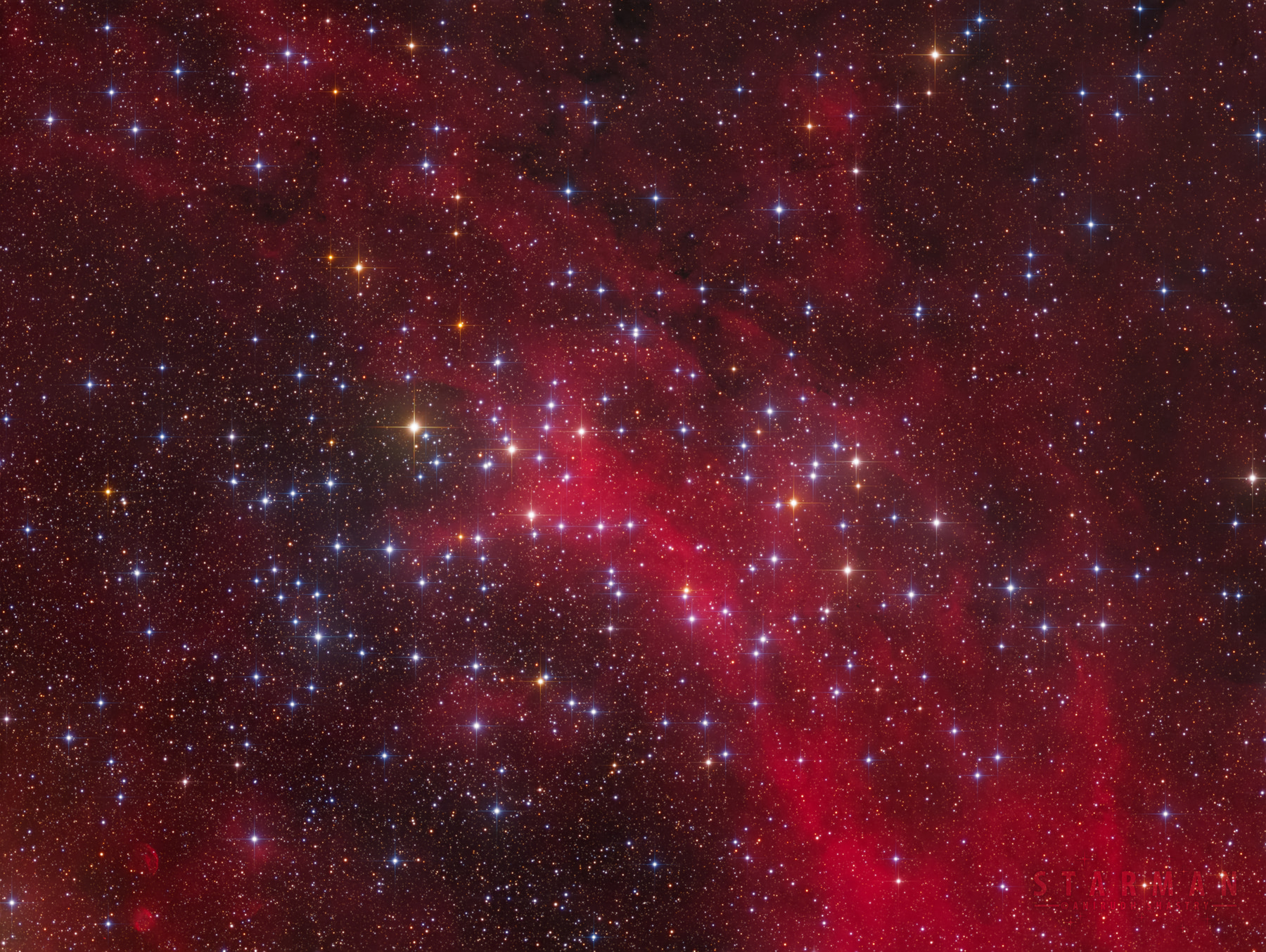
NGC 3532 earned its nickname honestly. Point any telescope at this corner of Carina and you see hundreds of stars strewn across the black like silver and gold coins glittering at the bottom of a well, and the name has stuck for generations: the Wishing Well Cluster. It is one of the richest open clusters in the entire sky, roughly 1,300 light years away, with some 400 members spread across an area larger than the full Moon. John Herschel, who surveyed the southern heavens from the Cape, ranked it among the finest clusters he had ever seen. It also holds a quieter distinction: on 20 May 1990 it became the first target the Hubble Space Telescope ever aimed at.
At around 300 million years old, the cluster has reached a photogenic middle age. Its most massive stars are long gone, and the survivors sort themselves by fate: hot blue-white stars still burning steadily, scattered among a handful of orange giants, aging members that have swollen and cooled into embers. The contrast between the two populations is the cluster’s signature, sapphires and topaz poured out of the same purse.
What the eyepiece never shows is what the hydrogen filter reveals. The cluster drifts in front of a vast field of glowing gas on the outskirts of the Carina Nebula complex, and the deep 900 second Ha subs pull it forward: crimson curtains sweeping diagonally behind the stars, folds of brighter red where the gas thickens, and sooty lanes of dust threading the upper field. The cluster is not related to the nebulosity, it simply lies in front of it, but the alignment turns a classic star field into something stranger, a well of coins sinking through fire.
Twelve hours of integration went into this rendering, most of it in hydrogen. The short RGB subs keep the stars tight and true to color, so the well stays full of silver and gold.
Captured from my remote setup at Obstech in Chile:
🔭 PlaneWave CDK500 Observatory System
📸 Moravian C5A-100M Camera
🎨 Chroma R, G, B, and 3nm Ha Filters
📀 R: 44×120s, G: 53×120s, B: 50×120s, Ha: 29×900s (12.15 hours)
🖥️ Processed in PixInsight and Adobe Photoshop