Overview
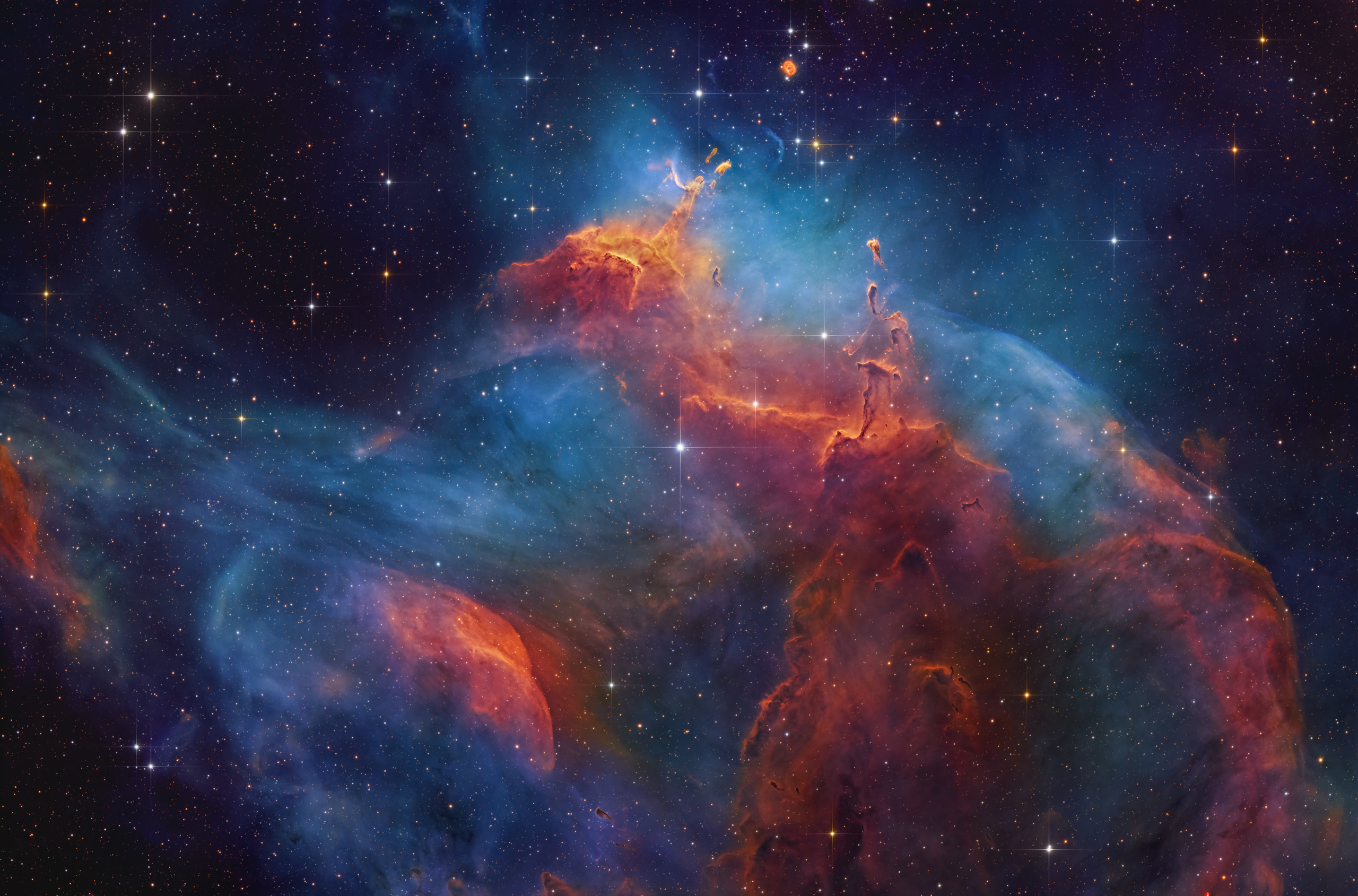
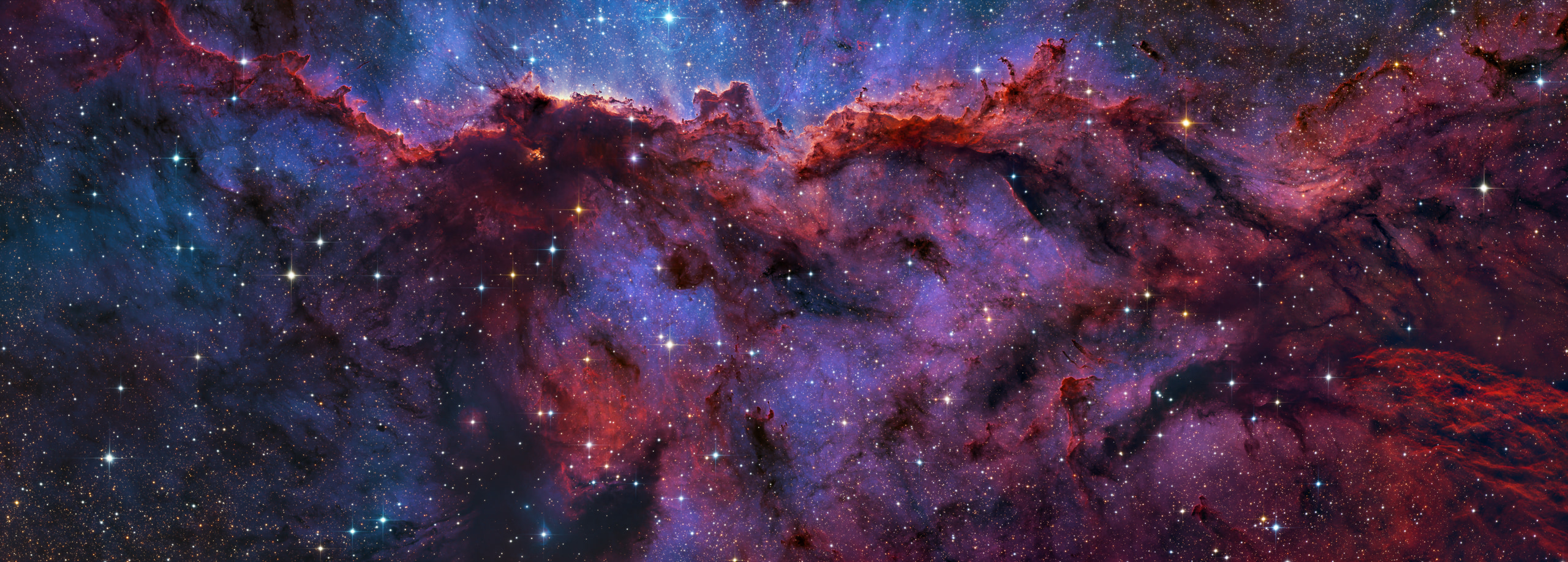
RCW 85 is a quiet emission nebula in Circinus, one of the lesser-traveled entries from the great Rodgers, Campbell, and Whiteoak survey that catalogued the hydrogen-alpha sky of the southern Milky Way in 1960. Tucked deep in the star clouds near the Centaurus border, it is the kind of object that rewards patience over spectacle. This is not a grand showpiece nebula but a slow-burning ember of ionized gas, its light filtered through one of the richest and dustiest corridors of the galaxy.
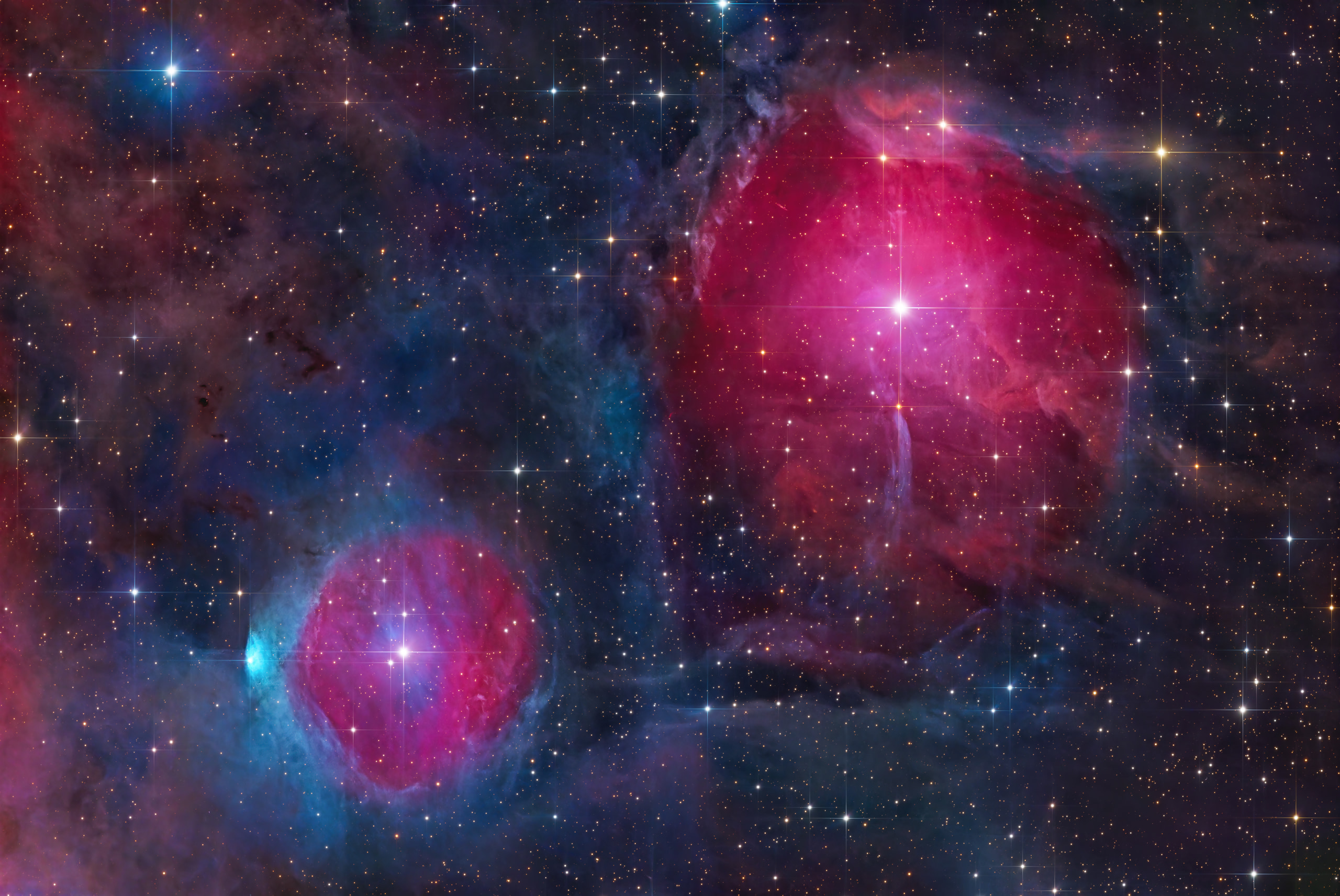
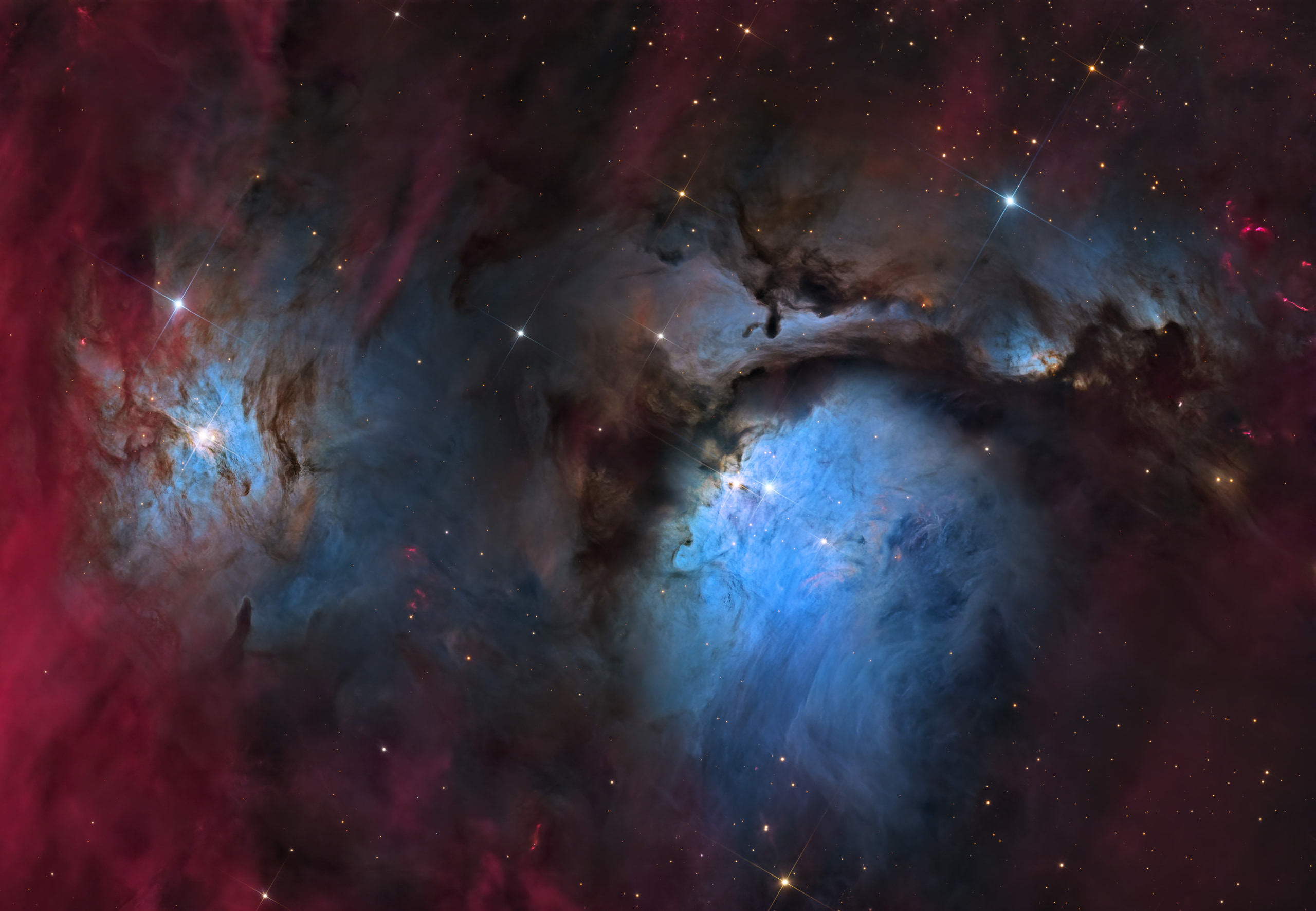
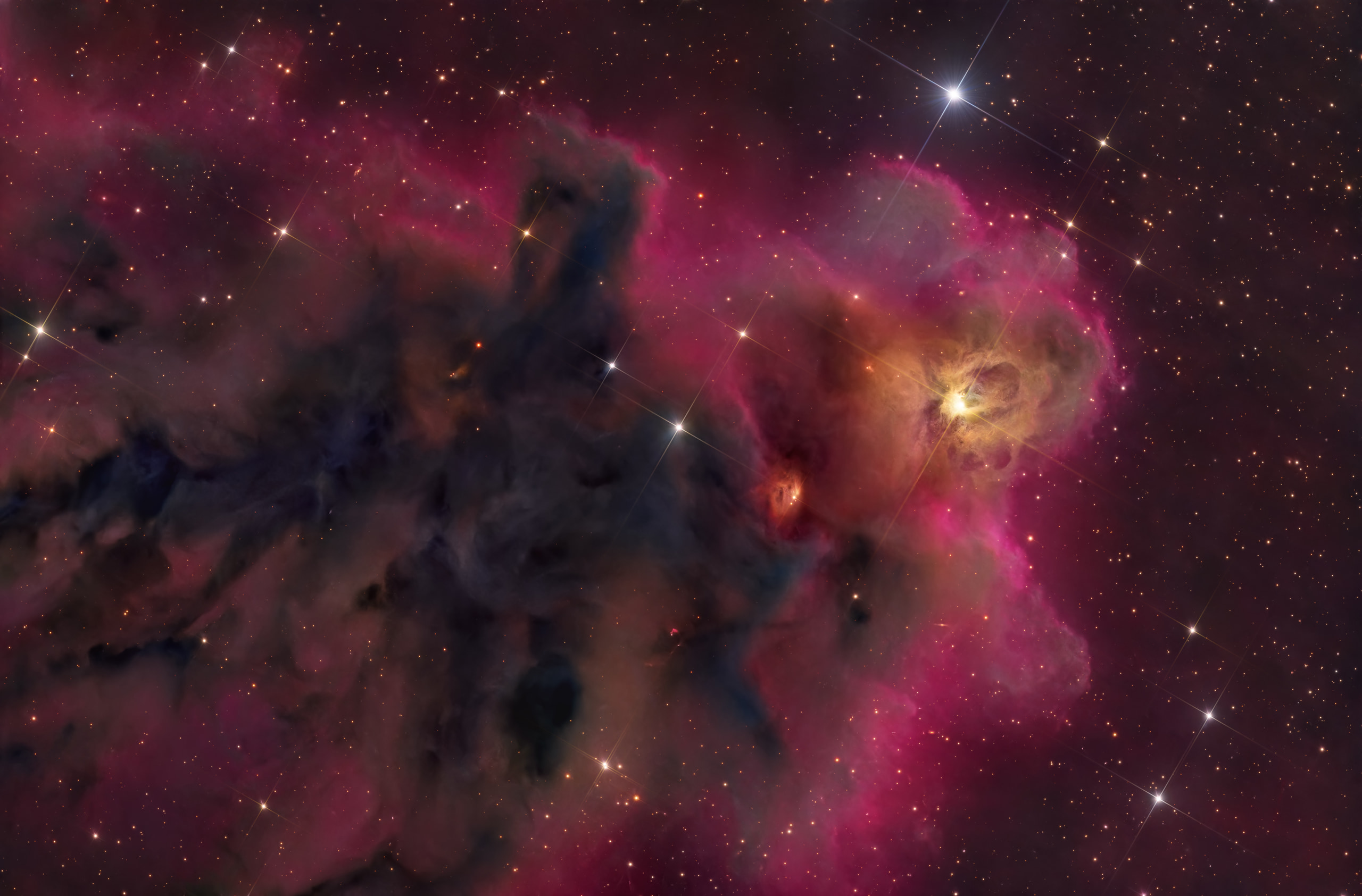
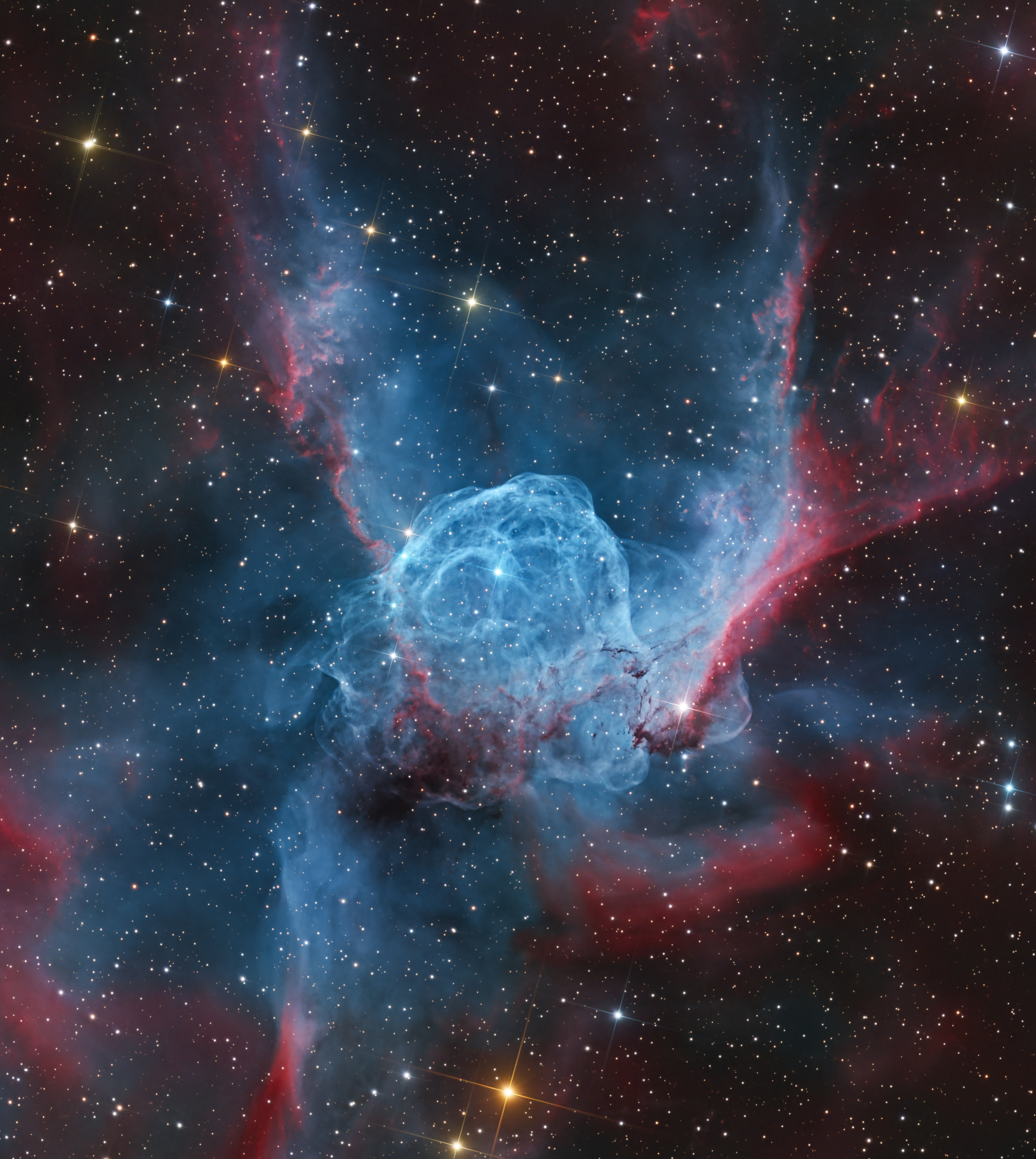
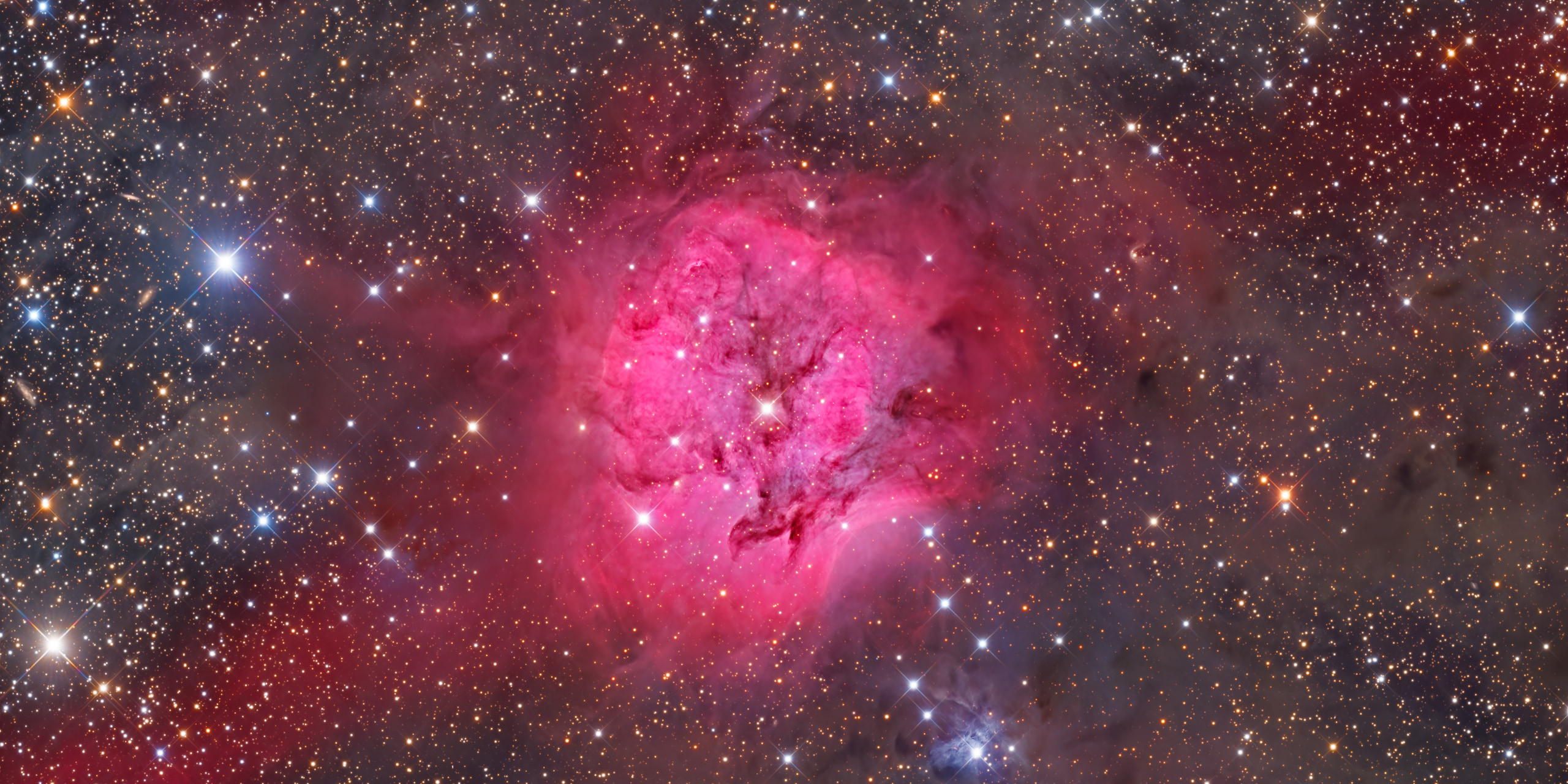
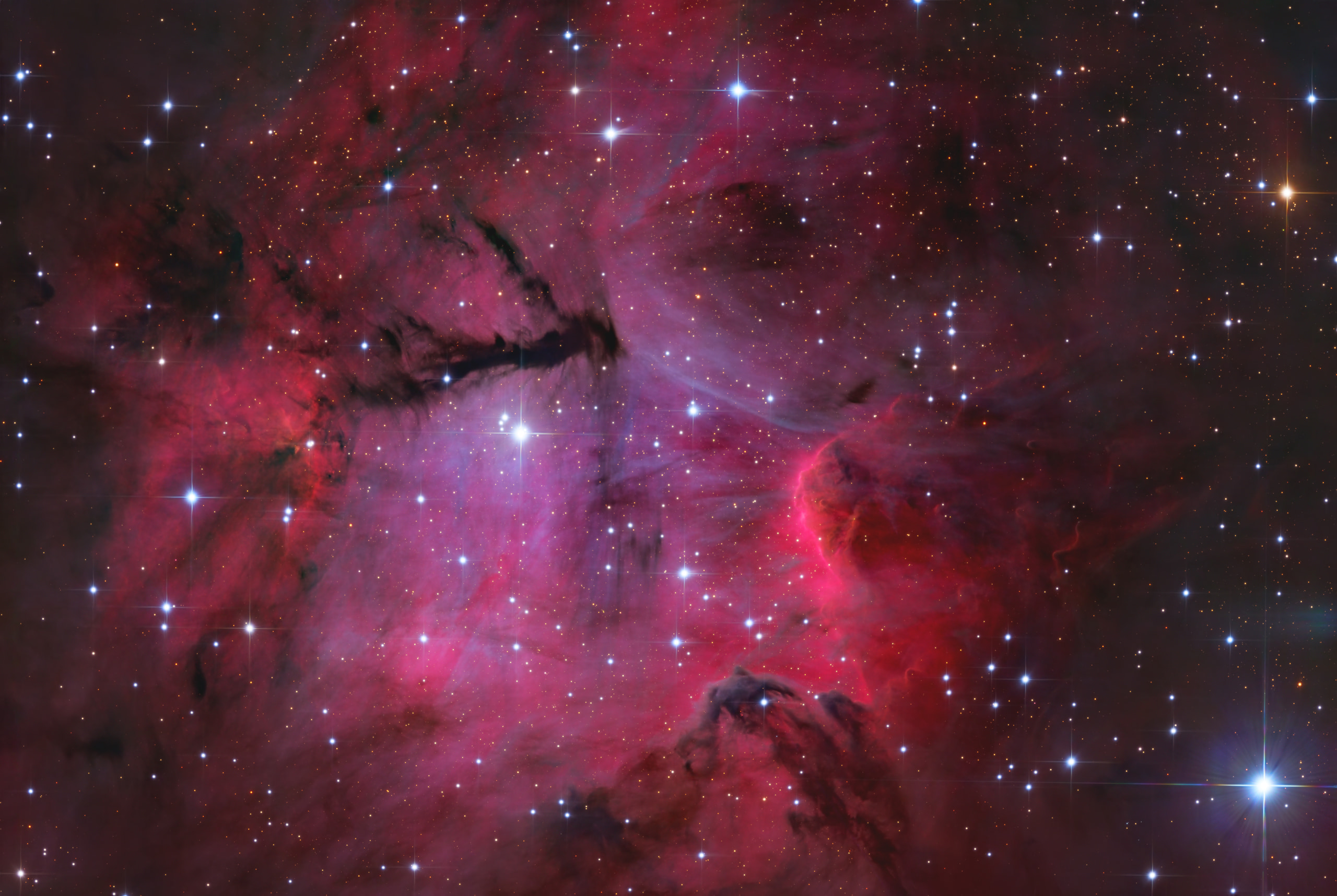
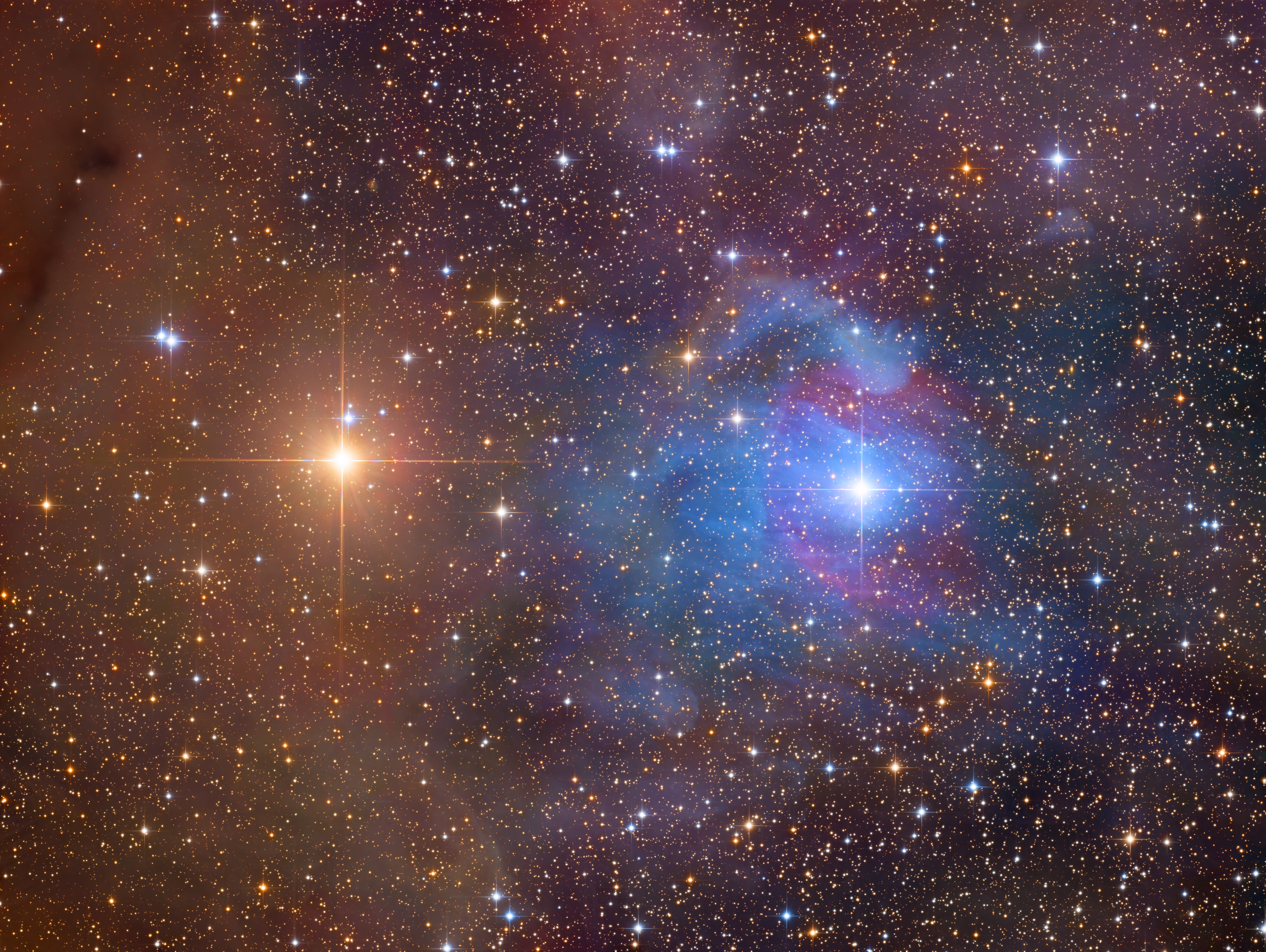
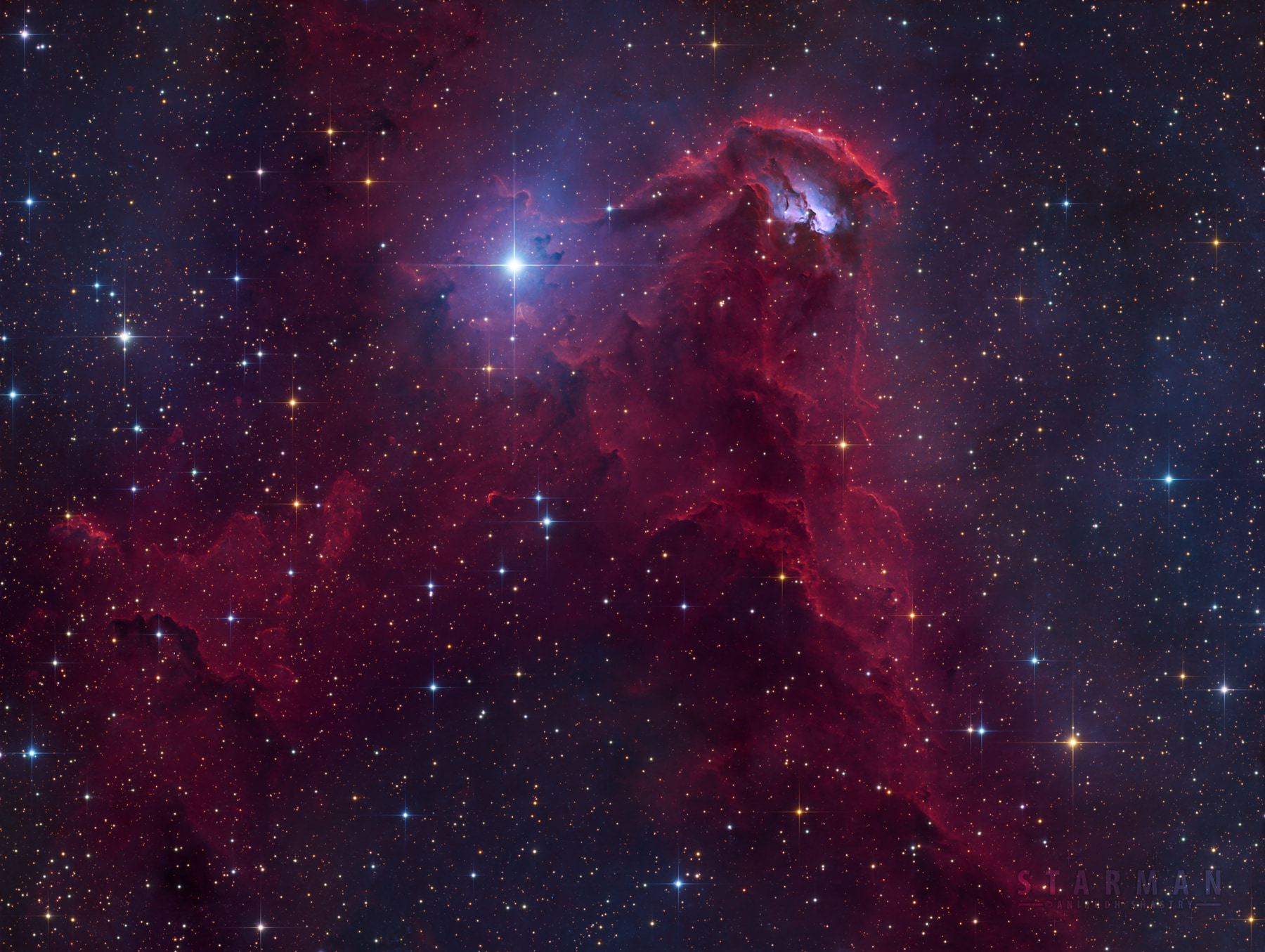
The frame is ruled by a single monumental structure: a vast tower of dark dust climbing through the field of crimson hydrogen, its edges rimmed in bright red where radiation from nearby stars slowly erodes it. At its crest the tower breaks open into the image’s most arresting feature, a cavity of glowing blue-white oxygen framed by a luminous red ridge, like a window blown clean through the top of the cloud. To its left, a brilliant blue star bathes its own corner of the nebula in cool light, with small dark globules drifting in silhouette across the glow. Below, wave upon wave of shadowed ridgelines roll toward the bottom of the frame, each crest traced in red against the darkness behind it.
In this SHORGB rendering, hydrogen and sulfur blend into the deep reds and crimsons that dominate the field, while oxygen emission stands apart in cold blue and violet, concentrated in the shining hollow at the top of the tower and in the haze around the bright blue star. The palette makes the physics visible. The blue marks where the ultraviolet light is hardest and the gas most energized, and the red marks the quieter body of the cloud, still dense enough to hold its dust intact.
What drew me to RCW 85 is precisely its obscurity. The southern sky is full of celebrated targets, but between them lie hundreds of these quieter clouds, each one a working piece of the galaxy’s star-forming machinery, photographed rarely and studied less. Spending twenty-one hours on a nearly anonymous patch of Circinus is an act of faith that the sky repays, because at this depth the faint nebula turns out to be an intricate, layered landscape, dense with texture that no survey plate ever hinted at.
The long 1200-second narrowband exposures carry the structure, with hydrogen and sulfur building the crimson body of the cloud and oxygen isolating the blue crown at the top of the tower, while short RGB exposures restore natural star colors and anchor the rendering in a believable field of southern Milky Way stars.
Captured from my remote setup at Obstech in Chile:
🔭 PlaneWave CDK600 Observatory System
📸 Moravian C5A-100M Camera
🎨 Chroma Sii, Ha, Oiii, R, G, and B Filters
📀 Sii: 21×1200s, Ha: 21×1200s, Oiii: 13×1200s, R: 29×120s, G: 28×120s, B: 26×120s (21.10 hours)
🖥️ Processed in PixInsight and Adobe Photoshop