Overview
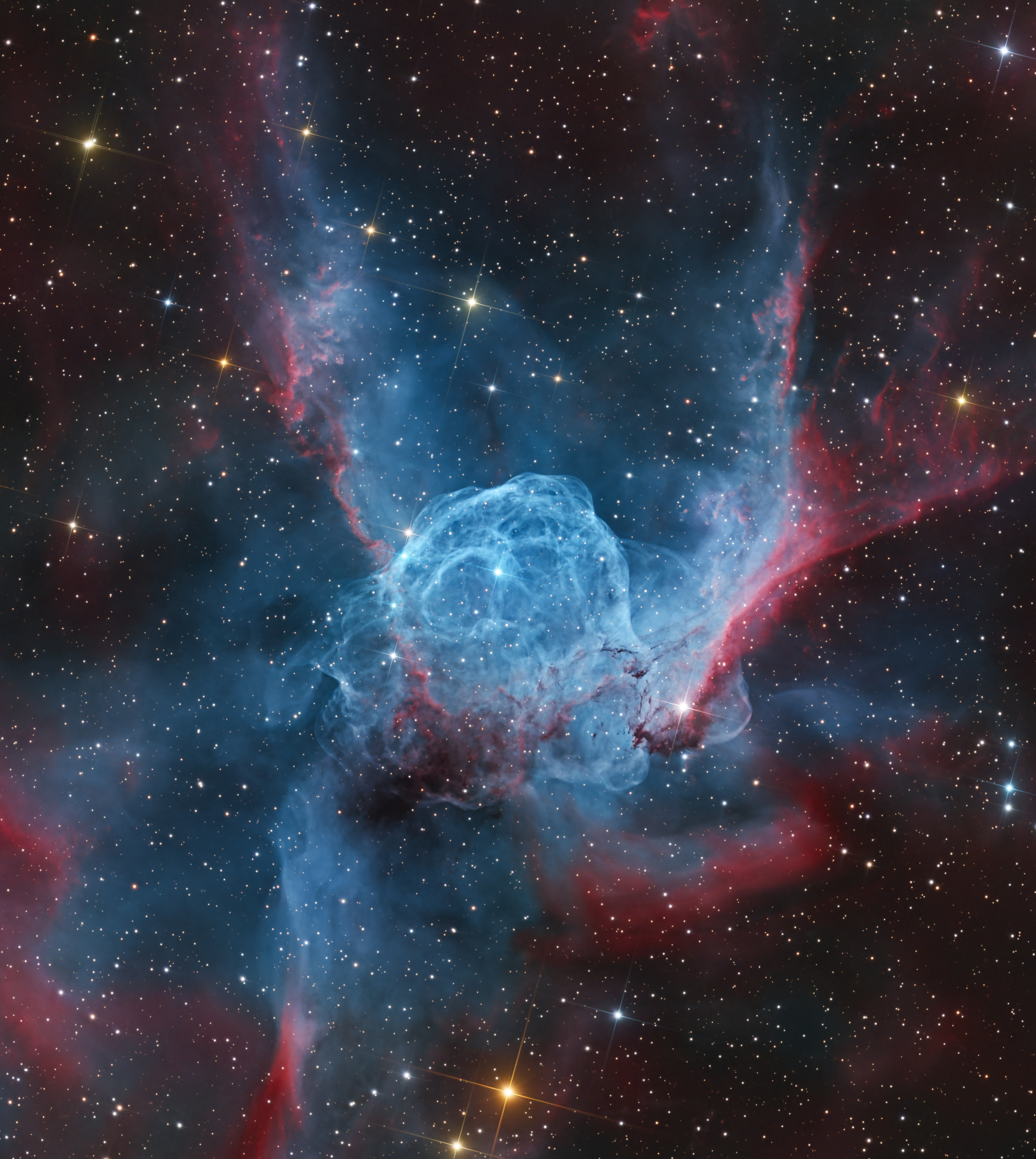
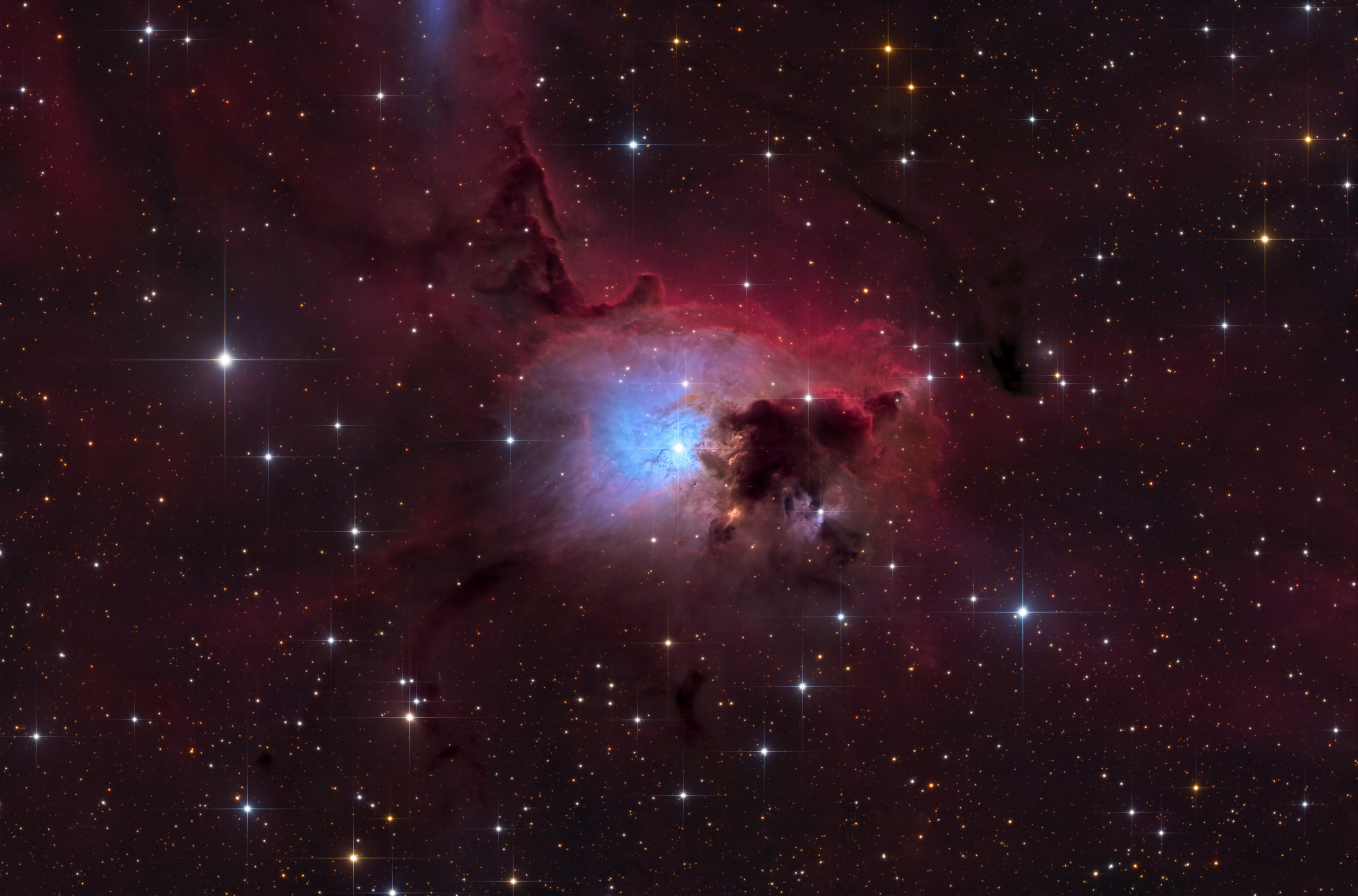
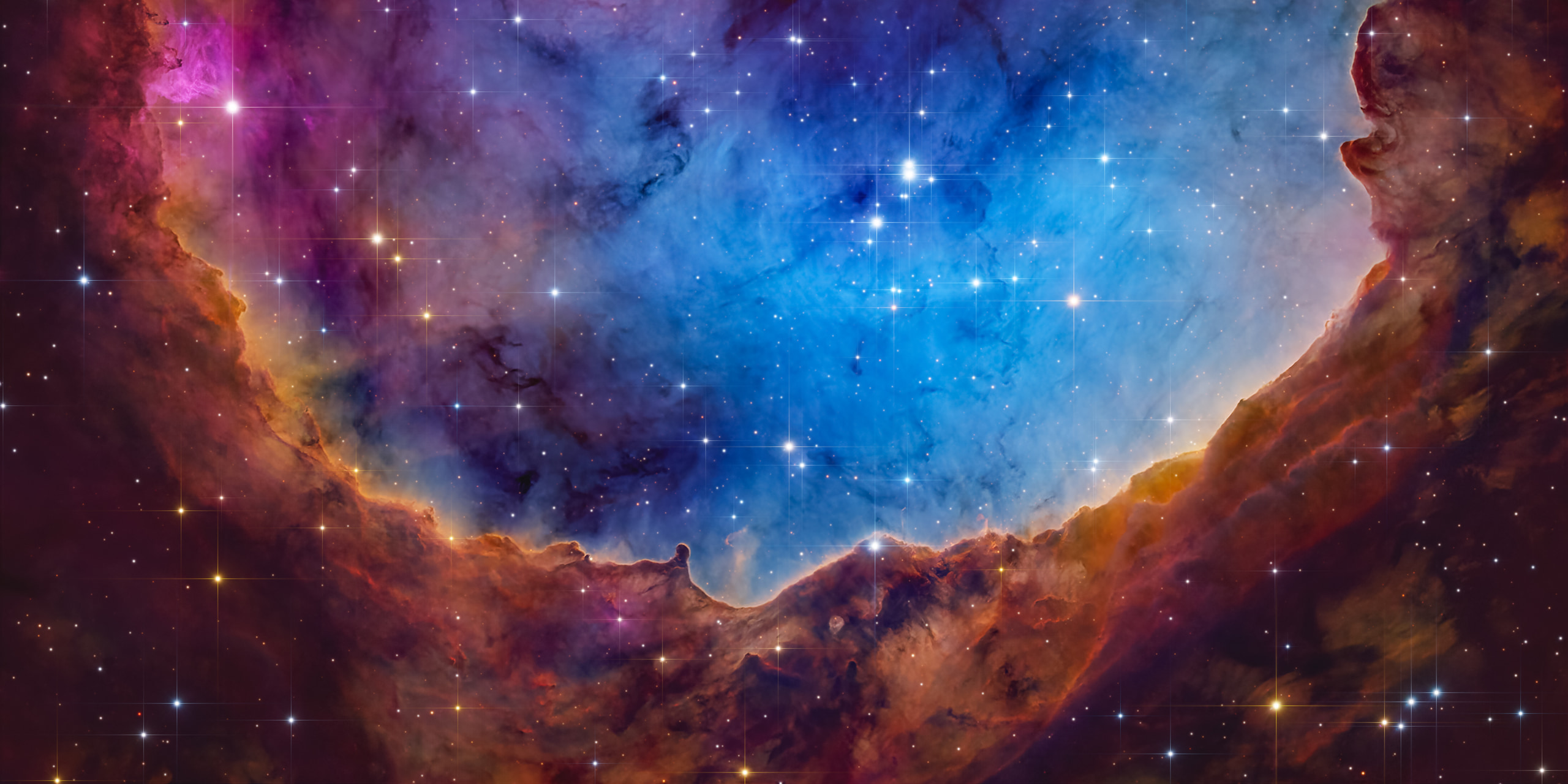
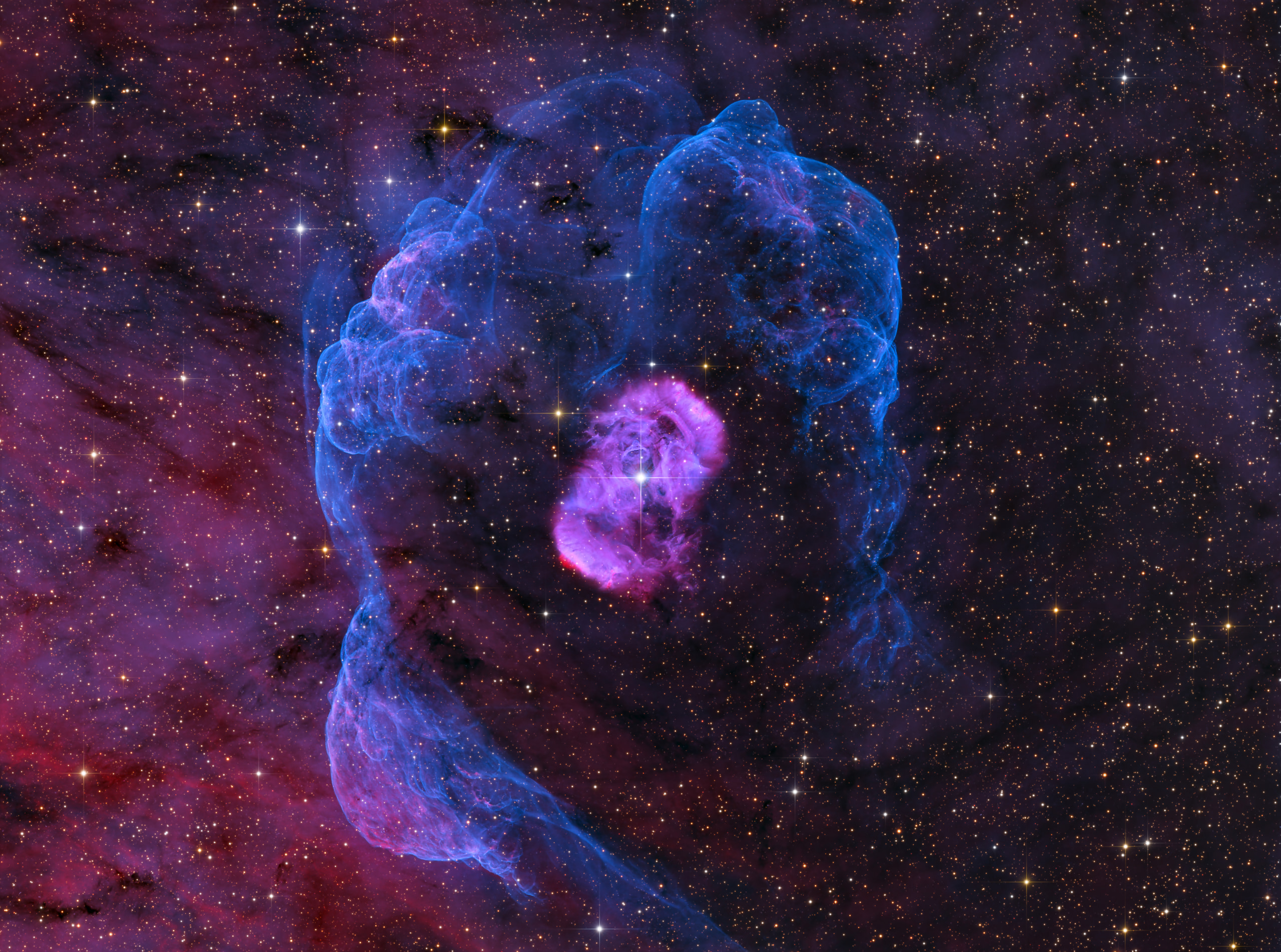
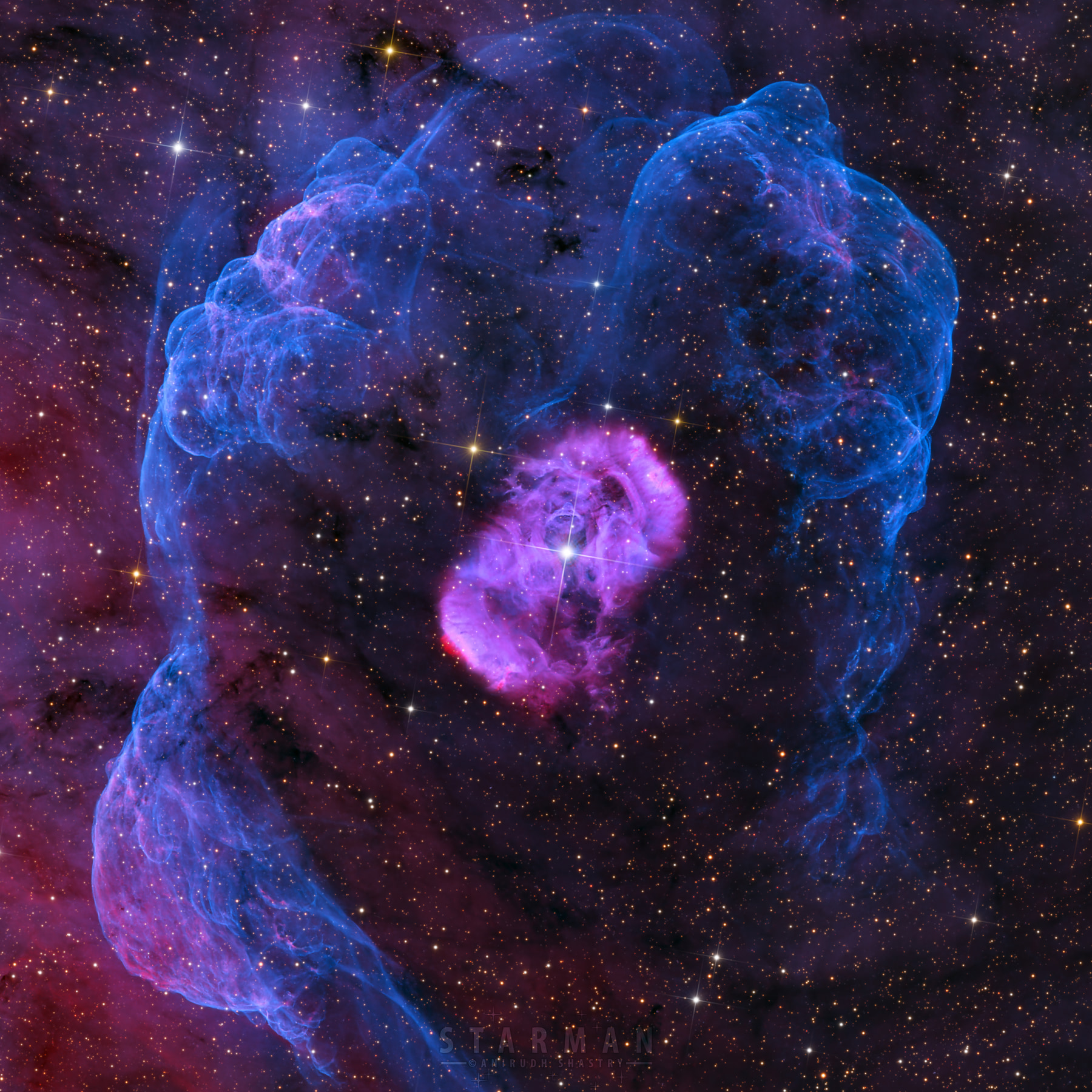
NGC 6164 is one of the strangest and most beautiful objects in the southern sky, a rare bipolar nebula in Ara known as the Dragon’s Egg. At its heart burns HD 148937, a massive O type star some 4,200 light years away, shining with the light of hundreds of thousands of Suns. Stars like this almost never form nebulae of such delicate symmetry, and that is precisely the mystery. The glowing egg of gas curled around it was not inherited from its birth cloud. It was thrown off by the star itself, an eruption written across several light years of space and only a few thousand years old.
The image tells the story in two acts. The inner act is the egg itself: a bright magenta spiral of hydrogen wound into a graceful S around the blazing central star, its twin lobes cataloged separately as NGC 6164 and NGC 6165 when John Herschel first swept them up. Look closely and the lobes resolve into knots, arcs, and braided filaments, the shrapnel of a stellar outburst still expanding into the dark. The outer act is far larger and far stranger: an enormous halo of oxygen light, rendered here in luminous blue, billowing around the egg like a translucent chrysalis. Its rippled shells and streaming curtains trace the ancient wind blown bubble of the star, shocked into fluorescence where fast winds slam into gas shed long ago. All of it floats against a backdrop of crimson hydrogen and sooty dust lanes, salted with the golden stars of the Milky Way.
The HOO palette makes the architecture legible. Hydrogen paints the dense ejecta of the egg in saturated pinks and magentas, while oxygen isolates the tenuous outer halo in cold blue, a structure so faint that it hides from shorter exposures entirely. Short RGB integrations restore the natural colors of the field stars and give the scene its depth. The thirty two hours of 1200 second oxygen and hydrogen subs were spent almost entirely in service of that halo, coaxing its ghostly shells out of the darkness until the egg sat visibly inside its shell within a shell.
Recent research has made this object even more extraordinary. HD 148937 is one of the very few massive stars known to carry a strong magnetic field, and studies published in 2024 suggest why: it was once two stars. In a violent merger within a multiple system, one star consumed its companion, rejuvenated itself, and emerged magnetized, flinging out the nitrogen rich cloud we now see as the nebula. The Dragon’s Egg is quite literally the debris of a stellar collision, a monument to one of the most dramatic events a star system can survive.
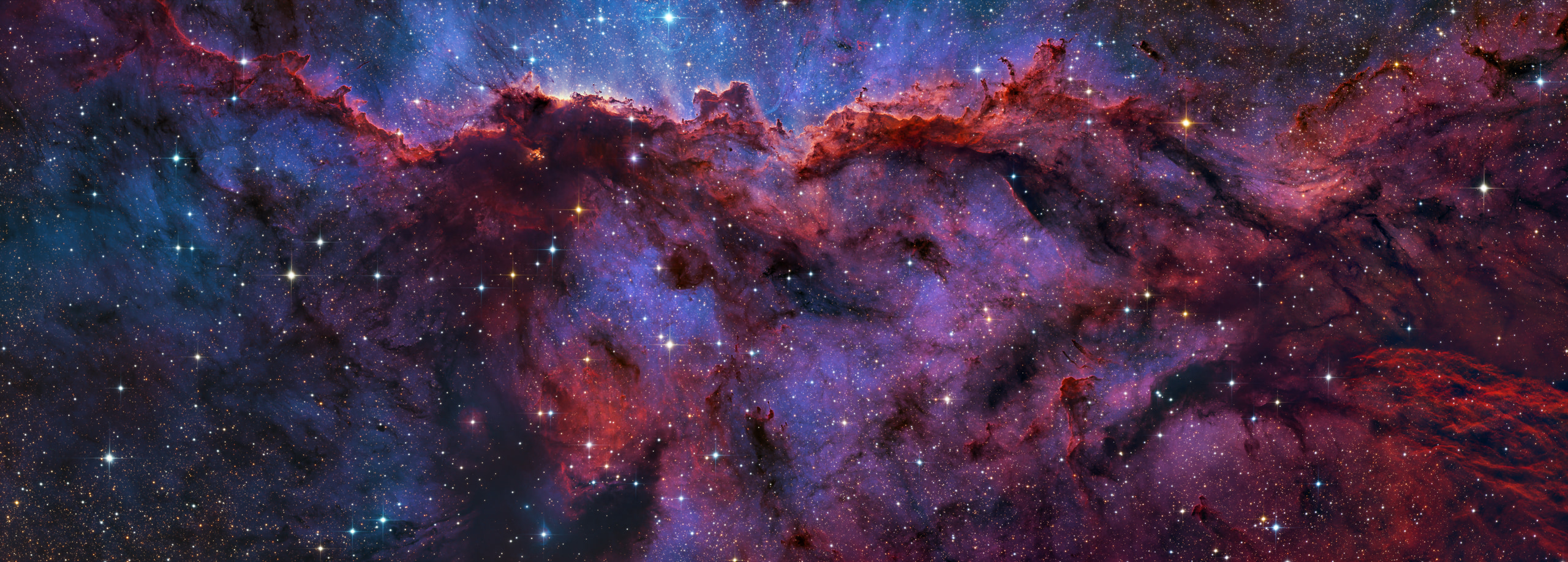
This target also completes a picture for me. Just a few degrees away rise the Fighting Dragons of Ara, NGC 6188, which I imaged earlier this year. Ever since, I have wanted to hang the egg beside its dragons, and the two now feel like panels of a single southern myth: the great beasts rearing in the dark, and nearby, glowing quietly in its cradle of blue, the egg they guard.
Captured from my remote setup at Obstech in Chile:
🔭 PlaneWave CDK600 Observatory System
📸 Moravian C5A-100M Camera
🎨 Chroma Ha, Oiii, R, G, and B Filters
📀 Ha: 37×1200s, Oiii: 32×1200s, R: 16×120s, G: 19×120s, B: 19×120s (24.80 hours)
🖥️ Processed in PixInsight and Adobe Photoshop