Overview
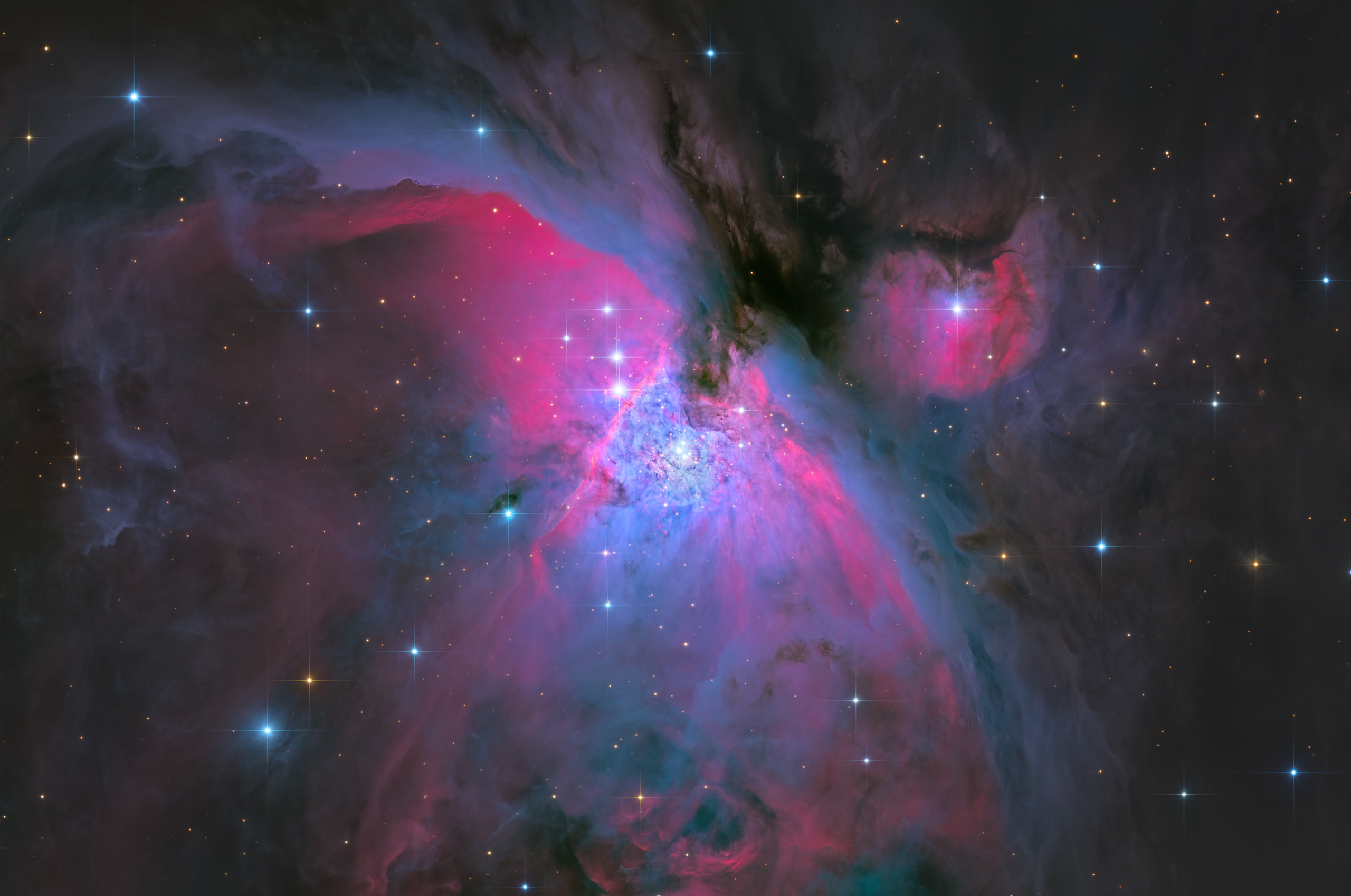
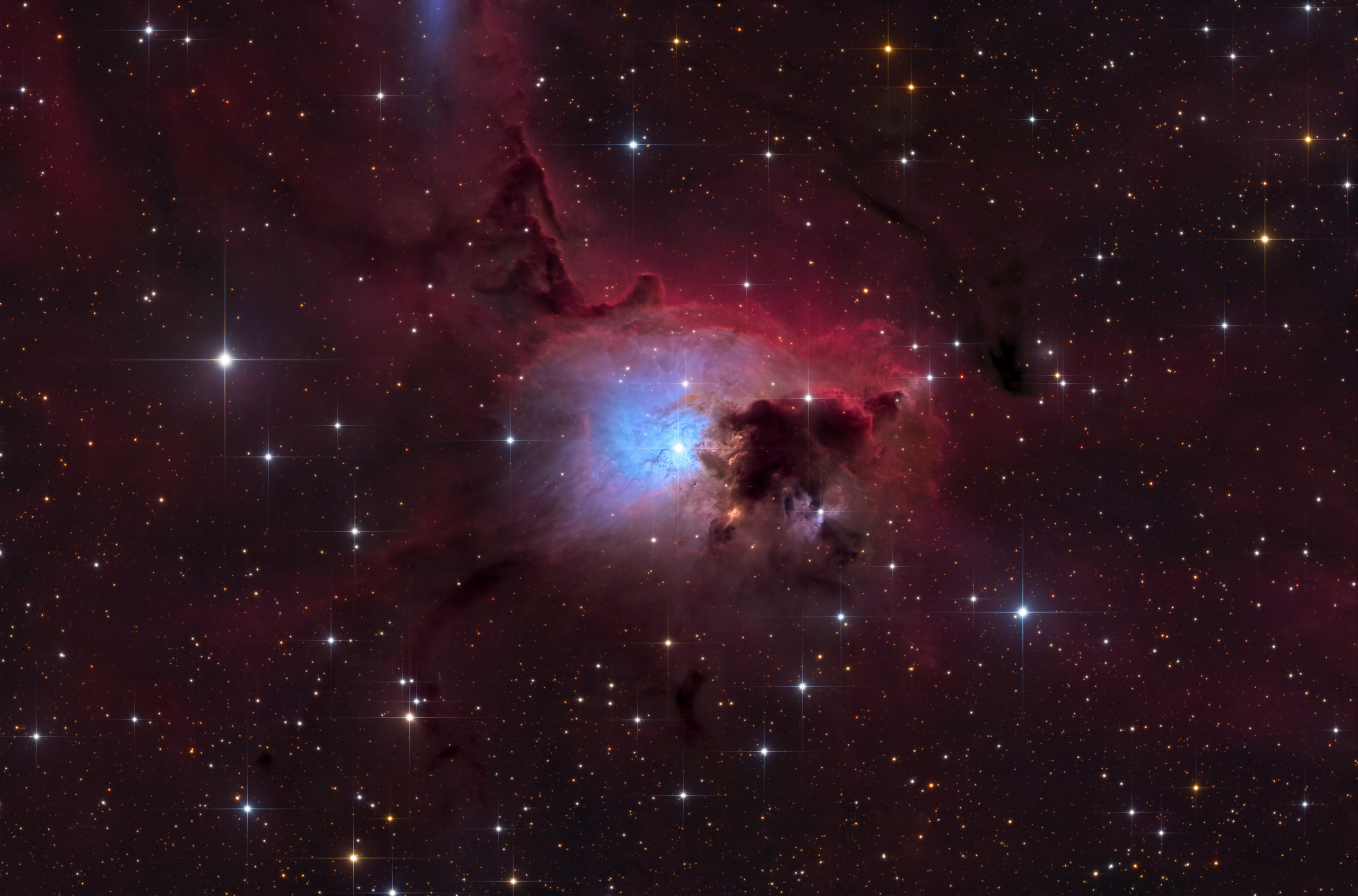
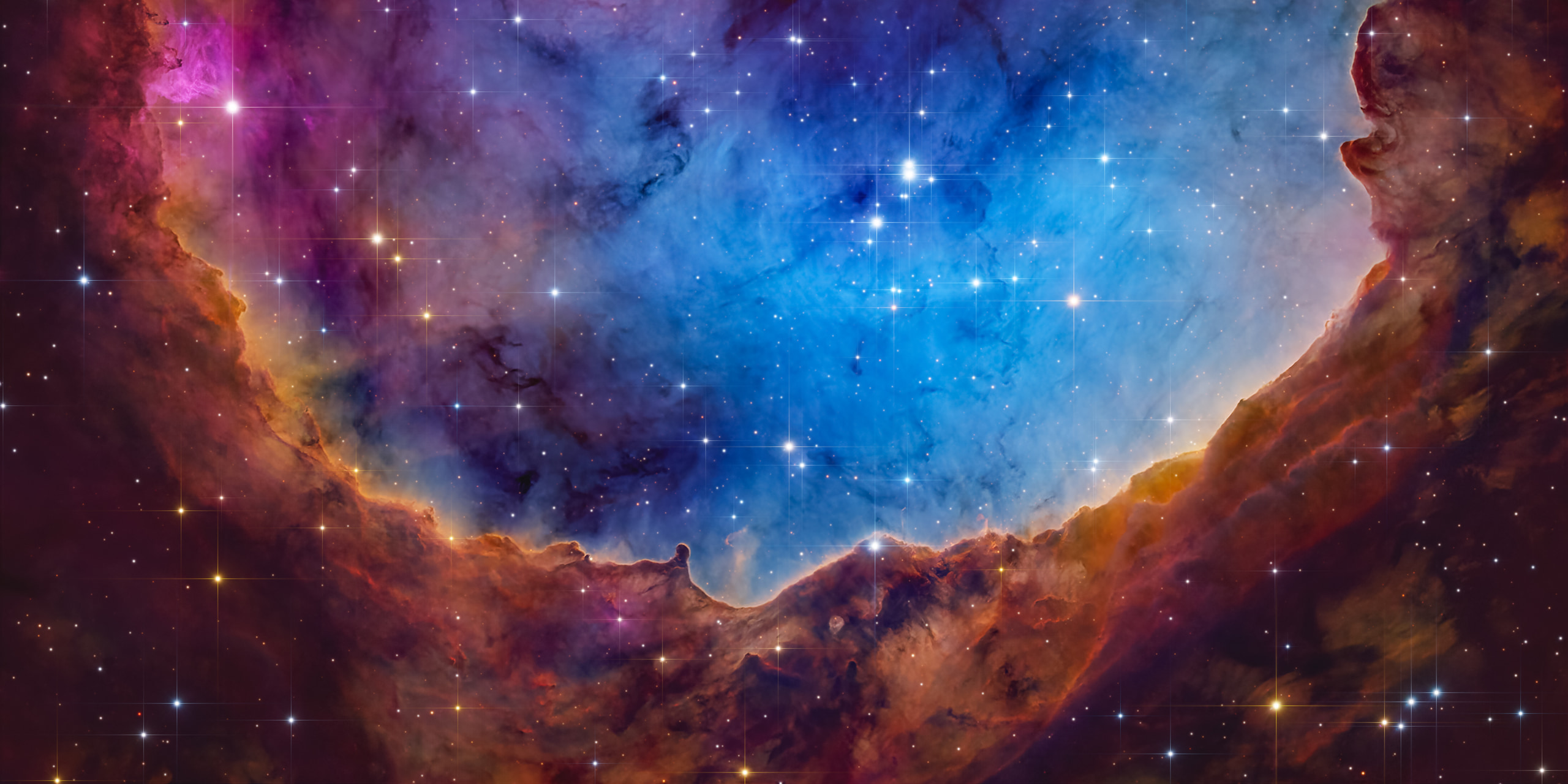
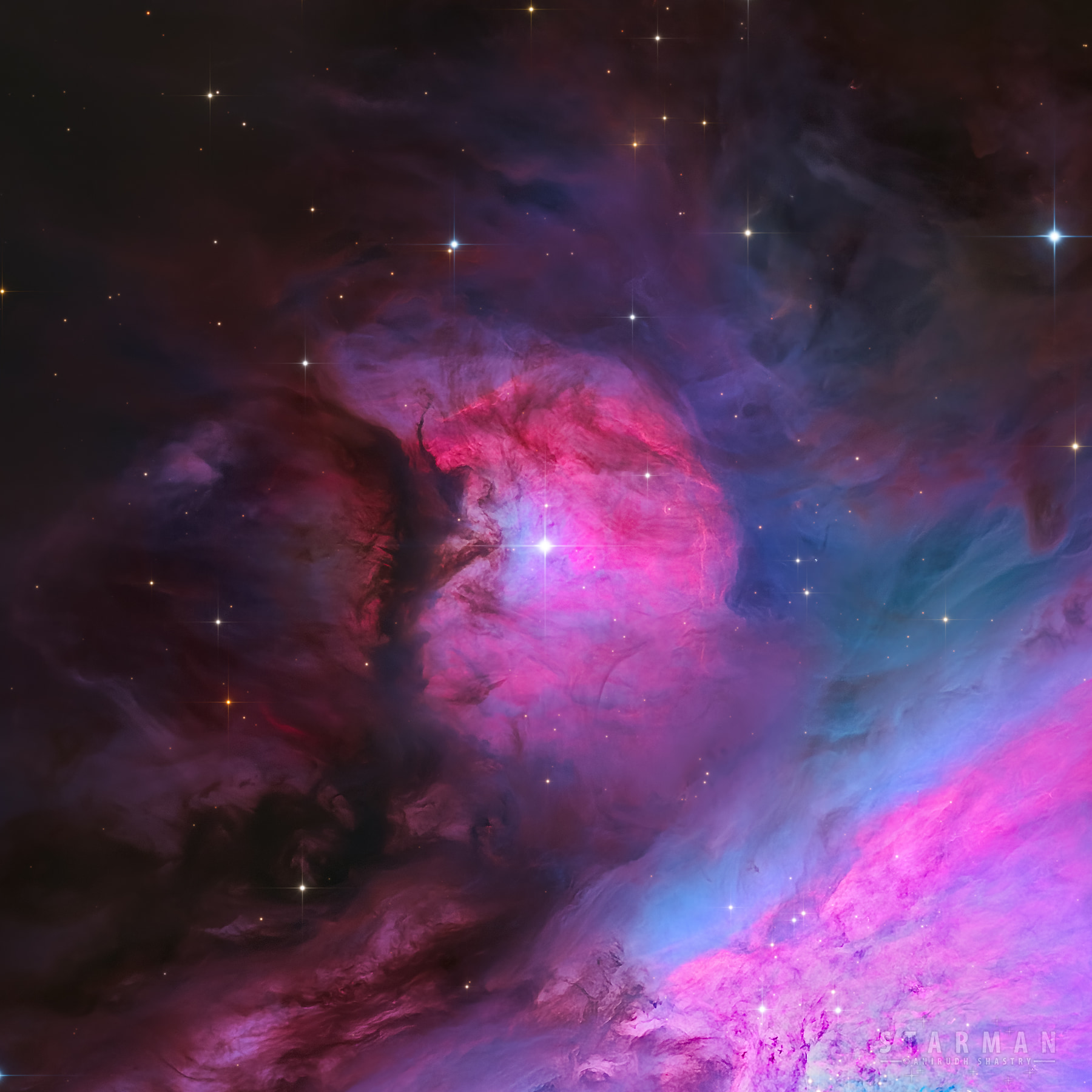
M 43 spends its life at the edge of other people’s photographs. Pressed against the northern rim of the Great Orion Nebula, it is almost always caught as an afterthought, a small bright comma at the border of yet another grand portrait of M 42. Jean-Jacques Dortous de Mairan noticed it as a thing apart nearly three centuries ago, and I wanted to honor that older way of seeing: to turn the telescope’s full attention on the forgotten neighbor and dive deep into its heart.
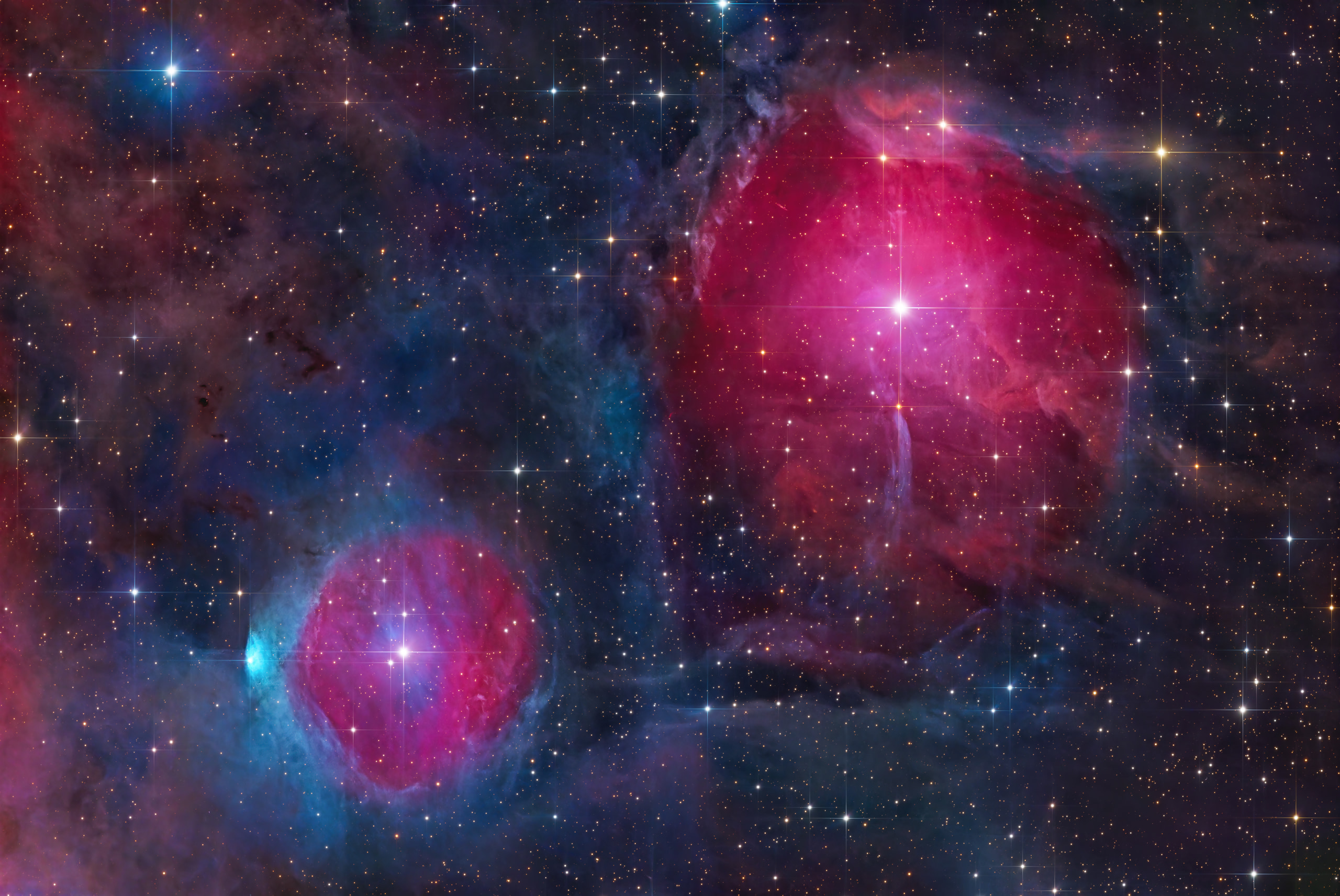
Seen up close, M 43 needs no borrowed grandeur. A single young star, NU Orionis, burns at its center and carves out this entire sphere of glowing hydrogen on its own. Its ultraviolet light saturates the core in magenta and rose, while cooler blue light scatters through the cavity around the star like mist caught in a headlamp. Curling across the bright face is a sculpted lane of dark dust, part of the great rift that divides M 43 from its famous companion, its edges eroded where the star’s radiation eats into the cloud.
And M 42 is still here, refusing to be left out. Its outer veils pour across the lower corner in waves of pink and electric cyan, a tide of light lapping at M 43’s shores. I like the tension in that boundary: the sky’s most photographed spectacle in a supporting role, so the quiet neighbor, for once, gets to be the destination.
With no luminance in this data set, I built a synthetic luminance from the RGB stacks themselves and used it to drive the detail. It made a real difference, lifting the faint gradations between the gas layers and giving the nebula a sense of depth and dimensionality rather than a flat wash of color.
Captured from my remote setup at Obstech in Chile:
🔭 PlaneWave CDK500 Observatory System
📸 Moravian C3-61000 PRO Camera
🎨 Chroma R, G, and B Filters
📀 R: 36×120s, G: 34×120s, B: 30×120s (3.33 hours)
🖥️ Processed in PixInsight and Adobe Photoshop