Overview
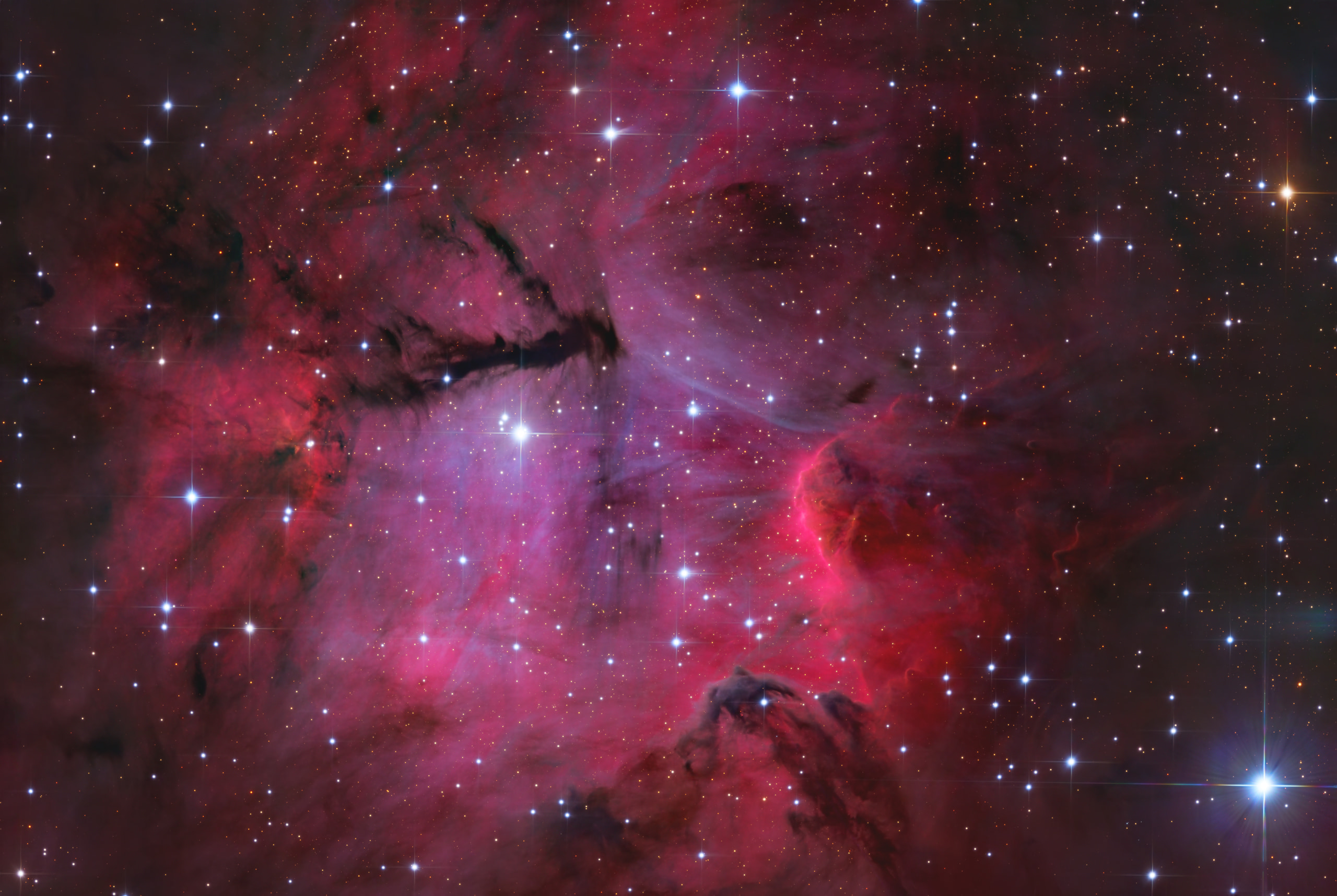
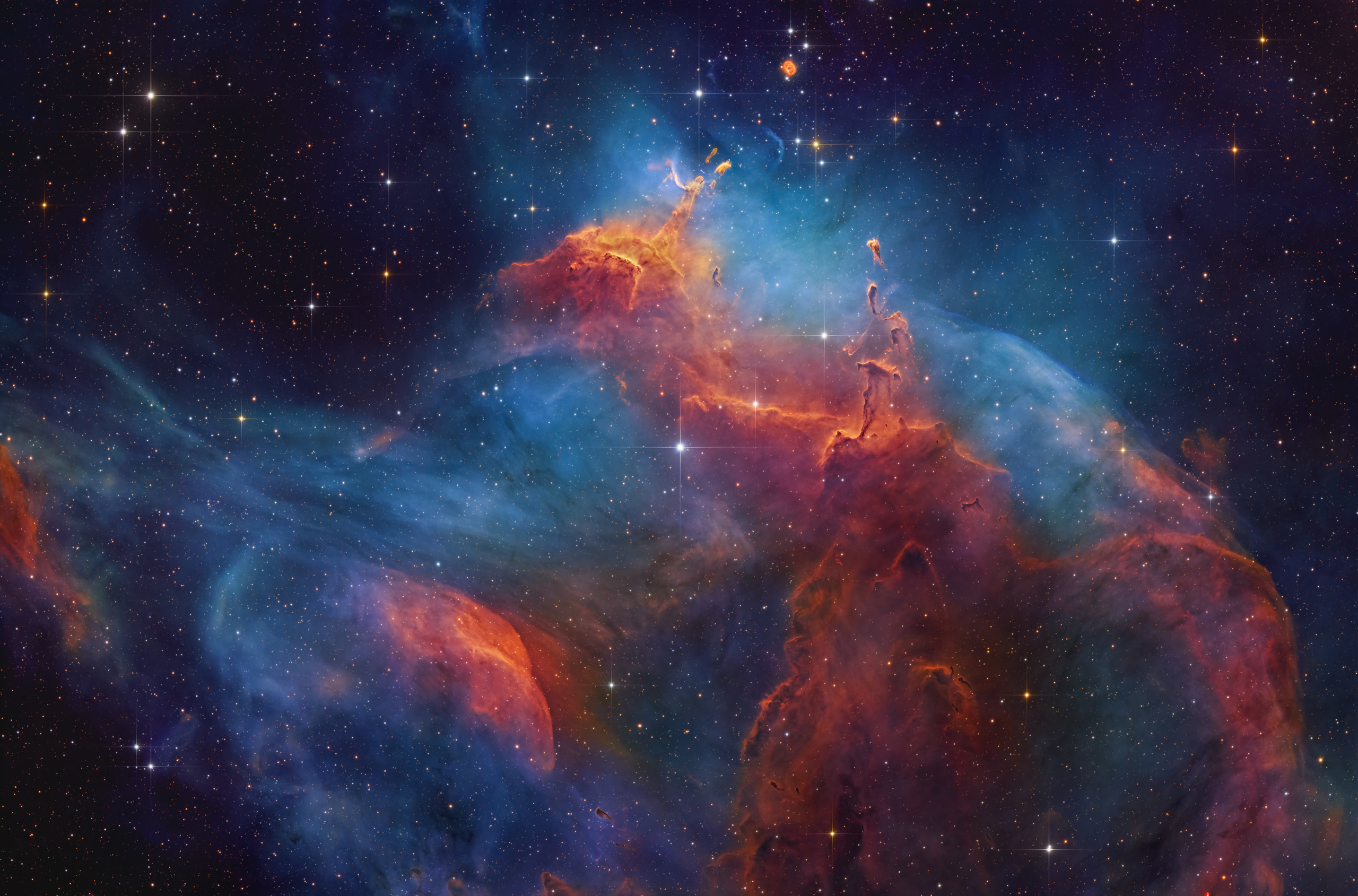
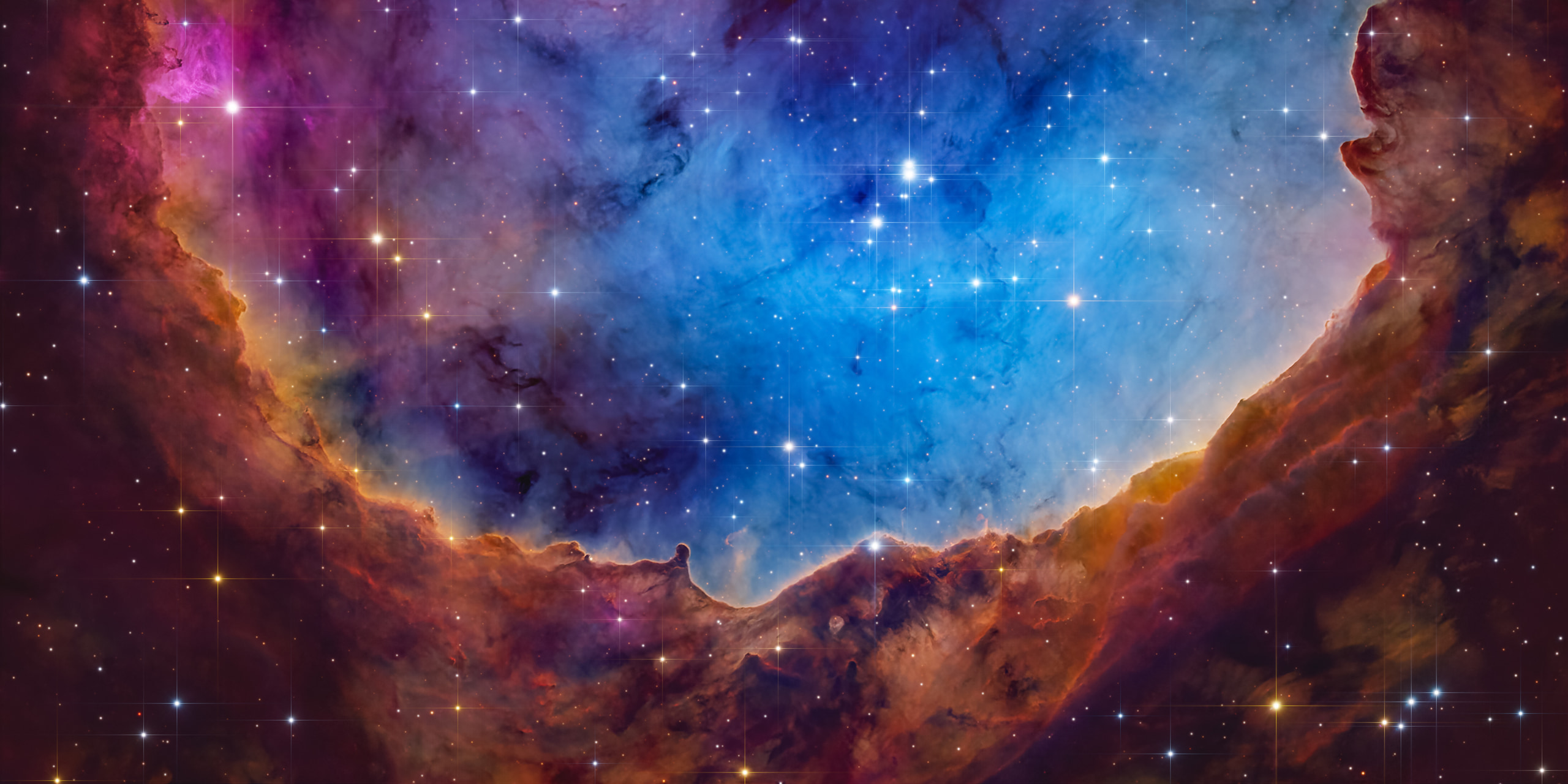
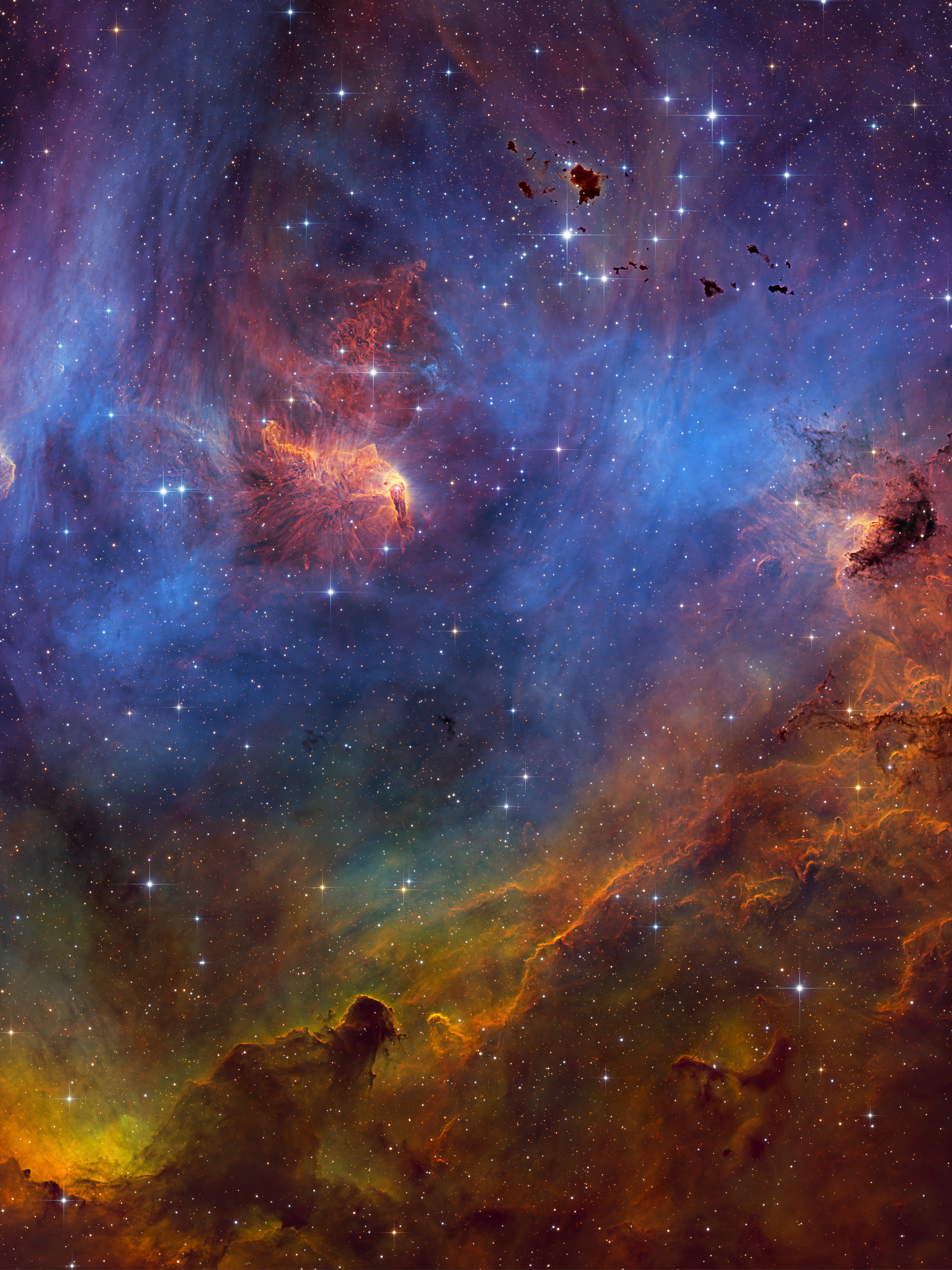
IC 2944 lies about 6,000 light years away in Centaurus, a sprawling cloud of hydrogen lit from within by a scattering of hot, young stars. Seen whole, its outline suggests a bird in full sprint, which is how it earned the name the Running Chicken. This frame leaves the chicken behind and steps inside it.
What I see is a mountain range at dusk. Along the bottom, dark ridges of dust rise in layered peaks, their crests burning orange where starlight strikes them and their valleys pooled with golden haze. Above them the sky opens into a wide blue expanse of glowing oxygen, drifting like mist over the summits. Near the center a small red cloud flares around a bright pillar, its gas combed into fine streaks by the winds of nearby stars.
In the upper right float Thackeray’s Globules, the dark knots first noted by A. D. Thackeray in 1950. They are dense clumps of gas and dust, the largest roughly a light year and a half across, silhouetted against the glow. Ultraviolet light from the massive stars around them is slowly eating them away, and whether any will hold together long enough to form stars is still an open question.
This is a classic SHO rendition in the Hubble palette, built from nearly 20 hours of data. Sulfur maps to red, hydrogen to green and oxygen to blue, which turns the ridges amber and gold and fills the sky with sapphire mist. The stars come from the RGB data, so they keep their natural colors against the narrowband glow.
What holds me here is the stillness. It looks like a quiet morning in the mountains, yet every peak in this frame is being carved away by light, one layer at a time.
Captured from my remote setup at Obstech in Chile:
🔭 PlaneWave CDK500 Observatory System
📸 Moravian C5A-100M Camera
🎨 Chroma R, G, B, 3nm Ha, Oiii and Sii Filters
📀 R: 15×120s, G: 15×120s, B: 15×120s, Ha: 20×1200s, Oiii: 17×1200s, Sii: 18×1200s (19.83 hours)
🖥️ Processed in PixInsight and Adobe Photoshop