



Overview
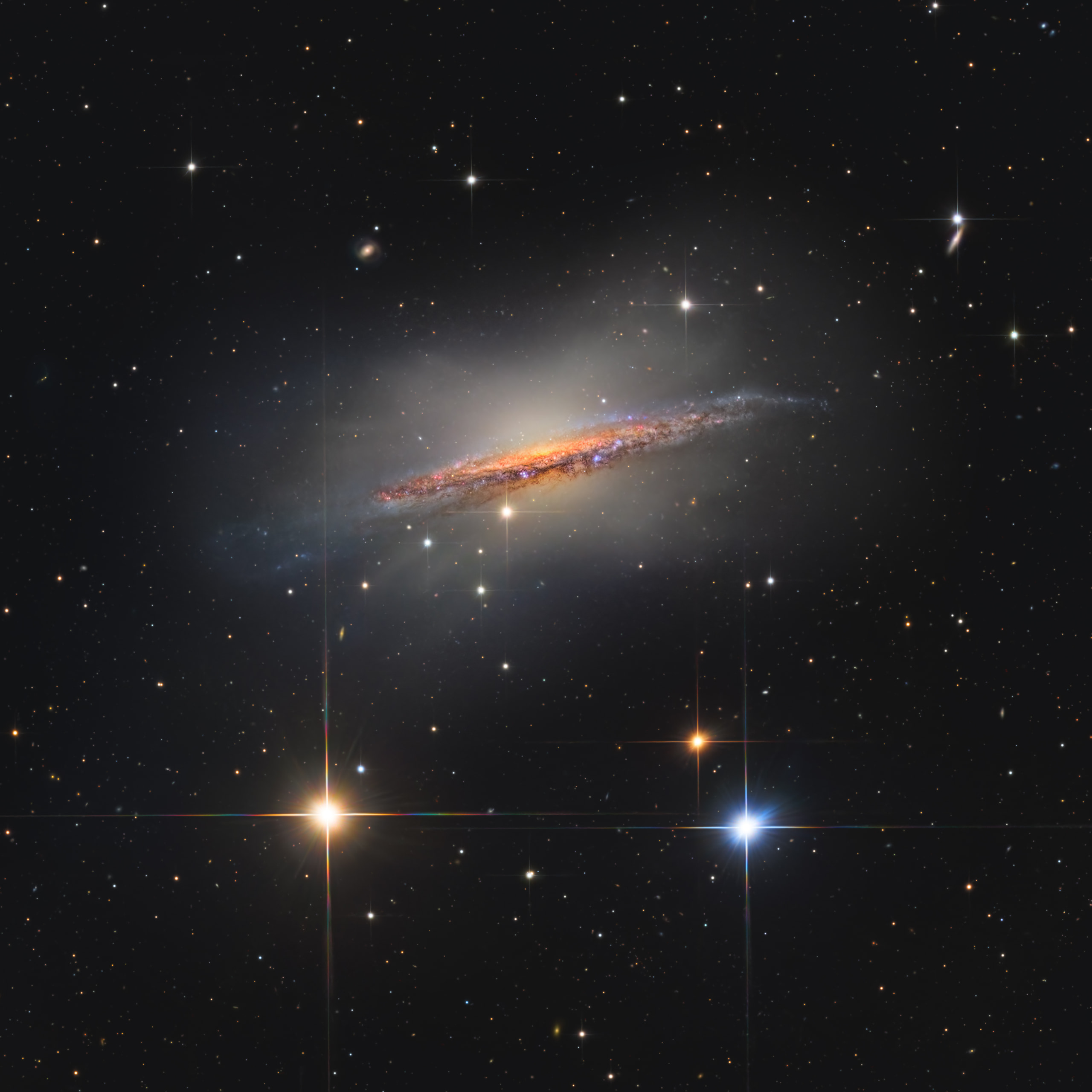
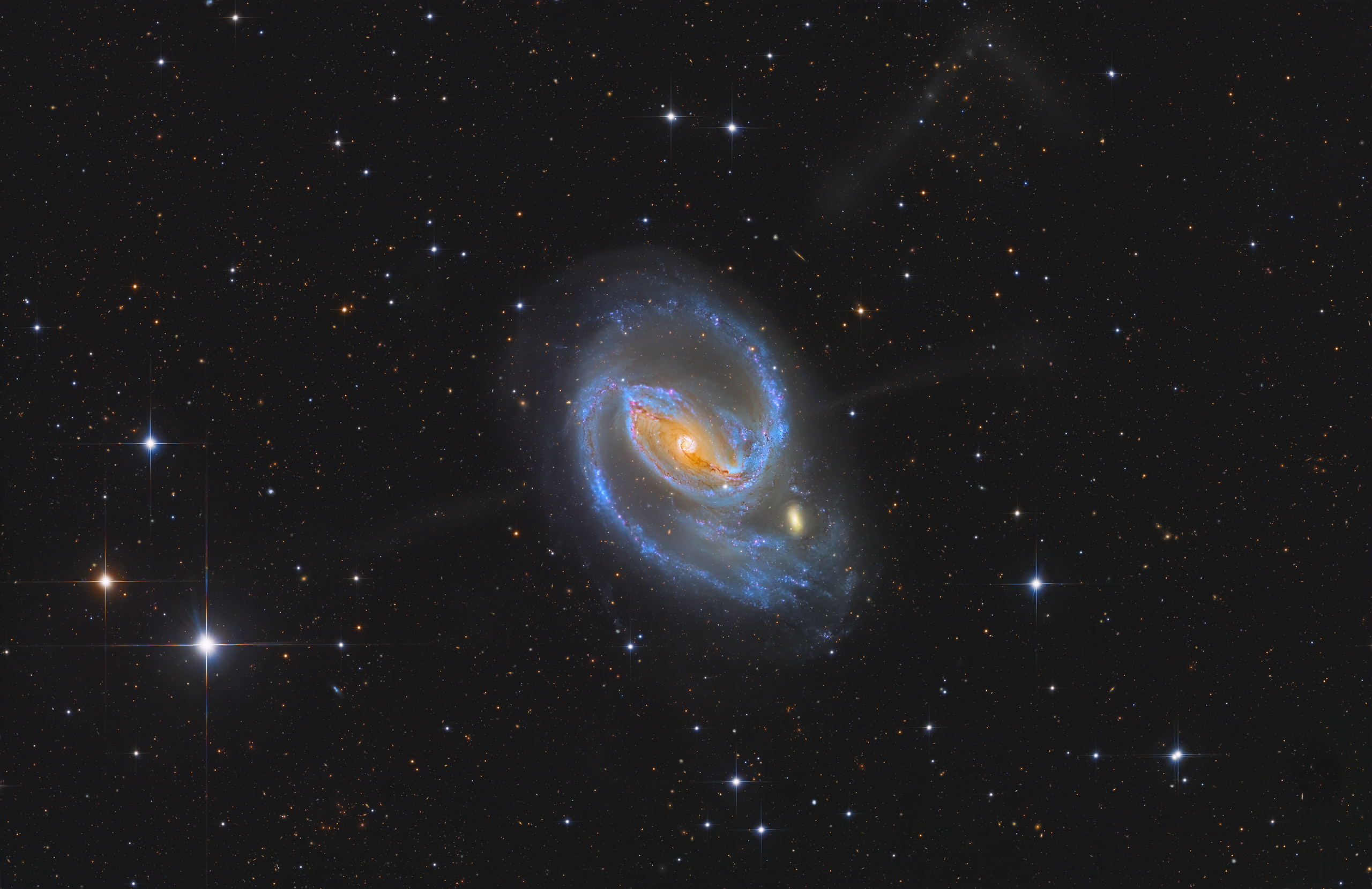
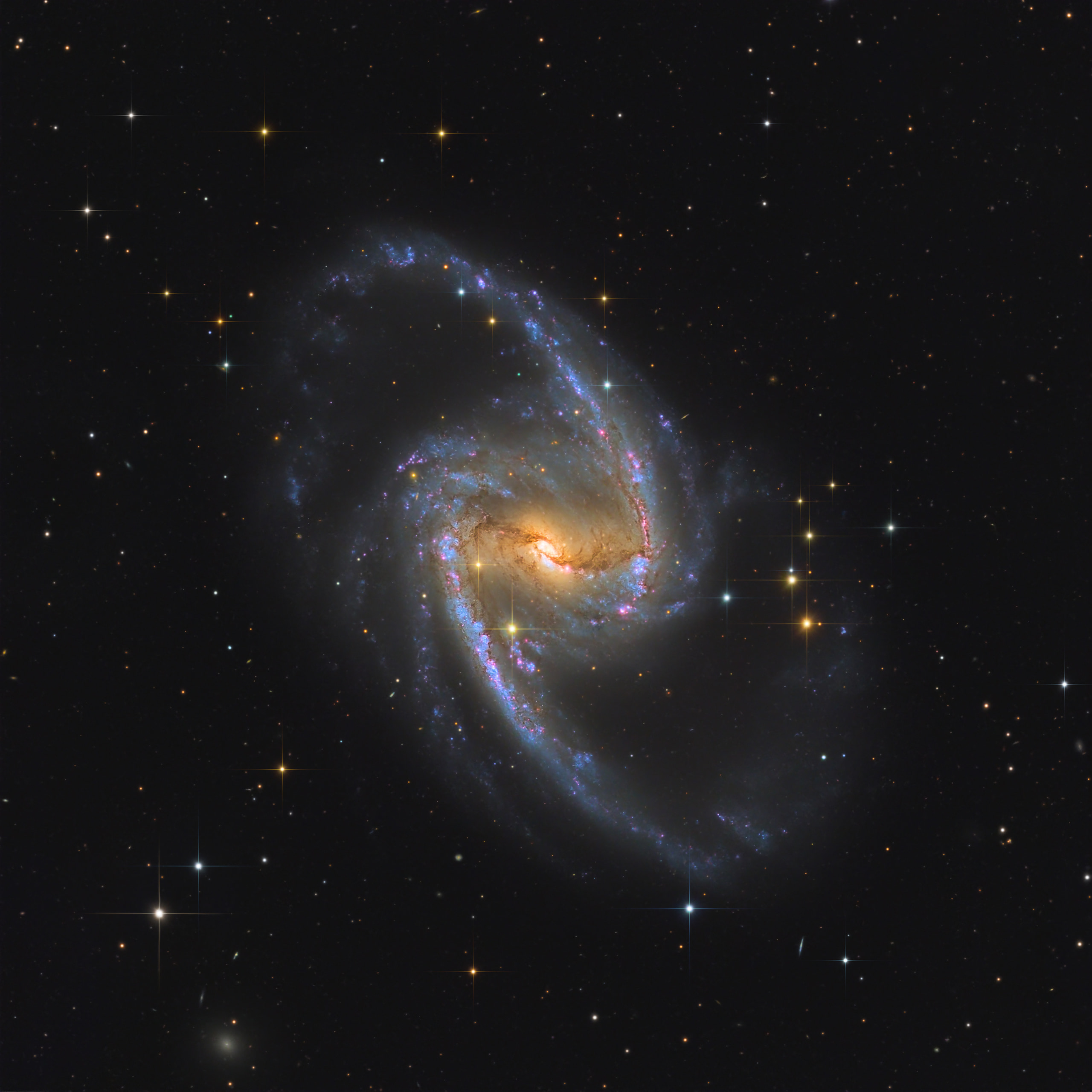
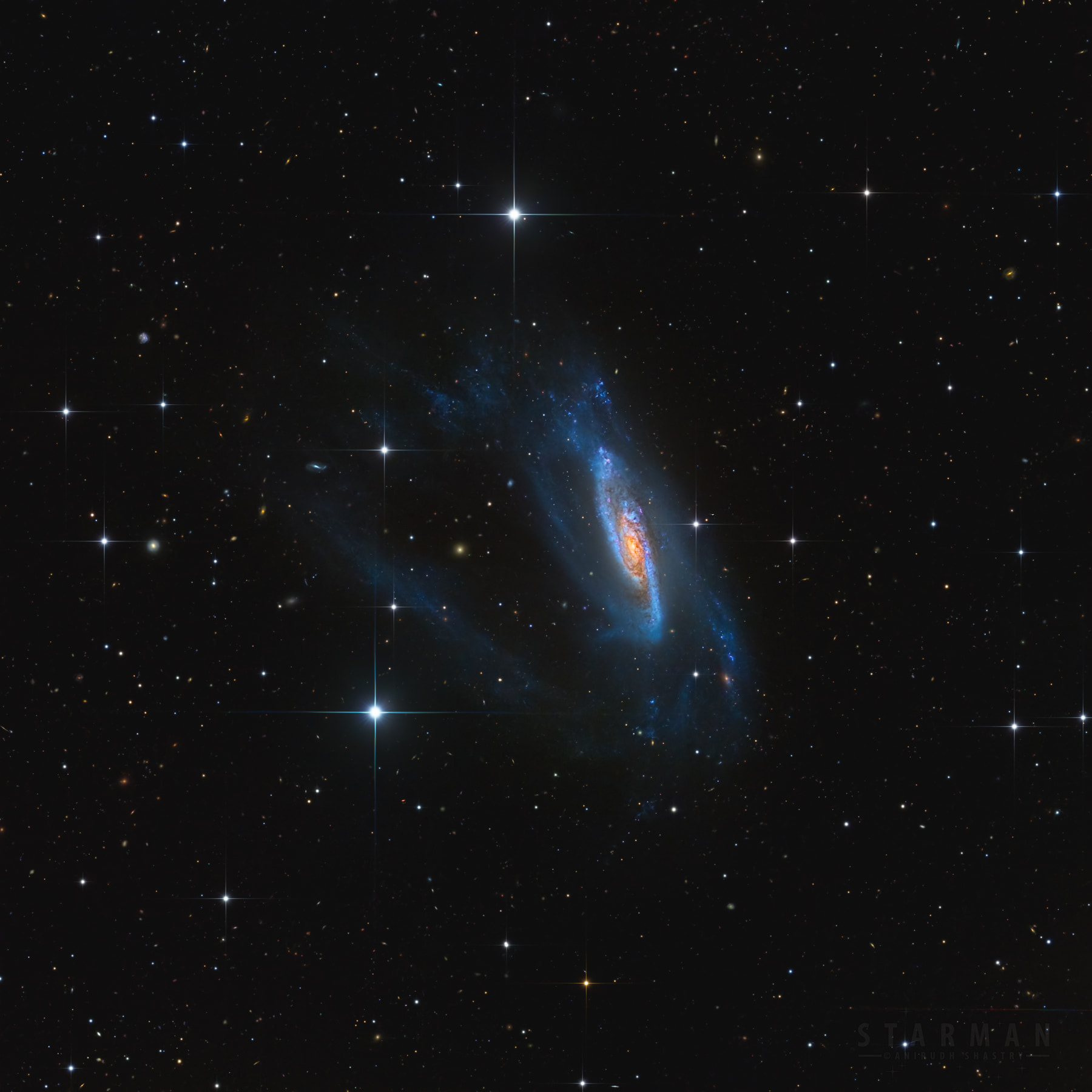
NGC 3981 looks like a galaxy coming undone. An amber heart burns through knotted dust, while blue spiral arms trail away in long, ragged veils. Follow them far enough and their light becomes almost indistinguishable from the darkness. Some 65 million light-years away in Crater, NGC 3981 bears the marks of gravity’s restless tides in its windswept arms. Yet for all that has pulled at it, stretched it, and tried to reshape it, the galaxy holds.
Even in the field of the mighty PlaneWave CDK20, it is a dot. And that is not all that makes it brutal to process. The core is bright, structured and unforgiving, while the outer arms live barely above the noise floor and must be coaxed out of the darkness. Reveal too little and they disappear. Push too far and the darkness begins inventing things that aren’t there. Much of the work was simply knowing when to stop.
I began collecting this light early in the year and continued for months from my CDK500 at Obstech, Chile. A camera change from the Moravian C3-61000 PRO to the C5A-100M complicated things; different datasets, multiple sets of biases, darks and flats, and plenty of troubleshooting with the Obstech crew before it all finally came together.
Captured from my remote setup at Obstech in Chile:
🔭 PlaneWave CDK500 Observatory System
📸 Moravian C3-61000 PRO and C5A-100M Cameras
🎨 Chroma L, R, G and B Filters
📀 L: 82x600s, R: 82x300s, G: 93x300s, B: 91x300s (35.83 hours)
🖥️ Processed in PixInsight and Adobe Photoshop