Overview
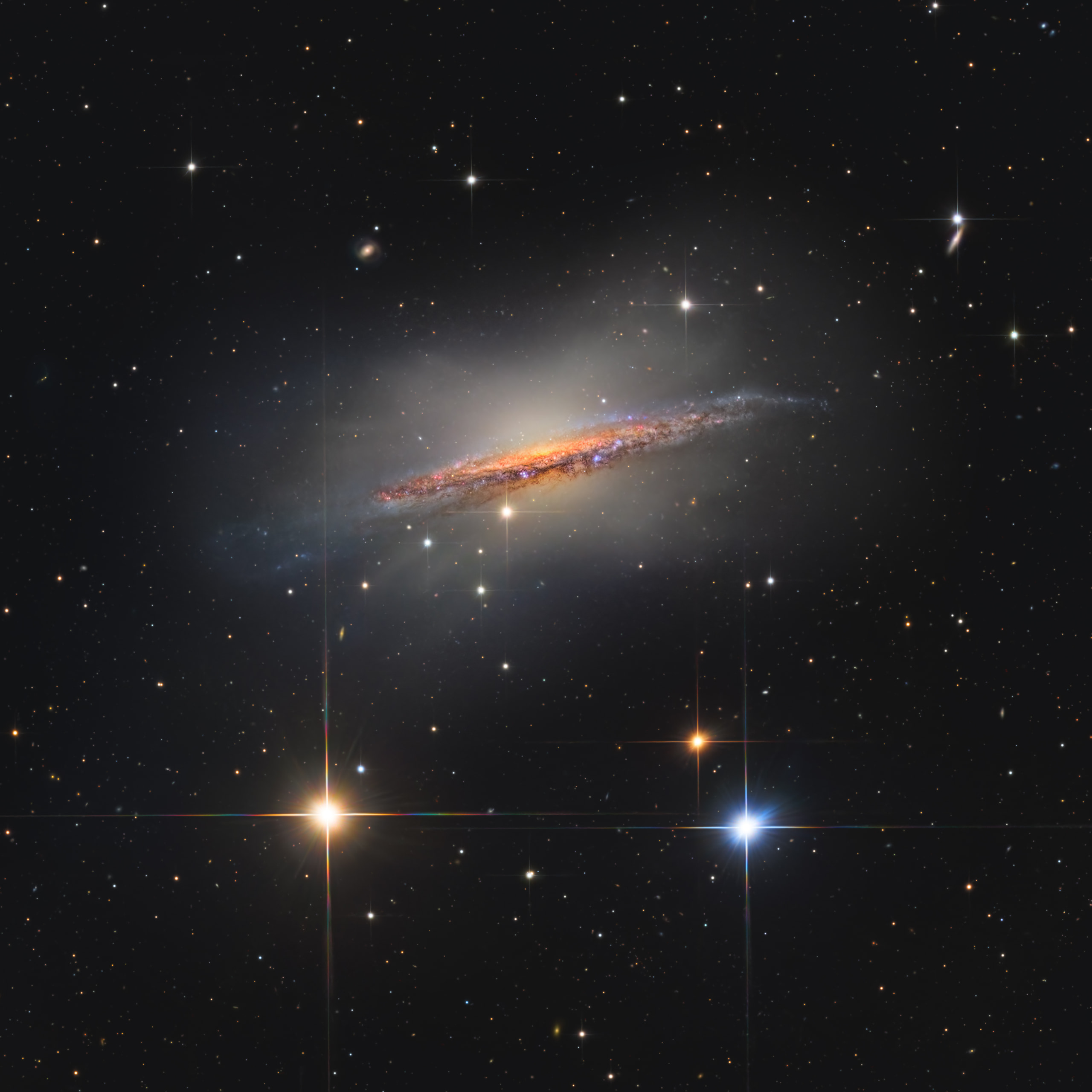
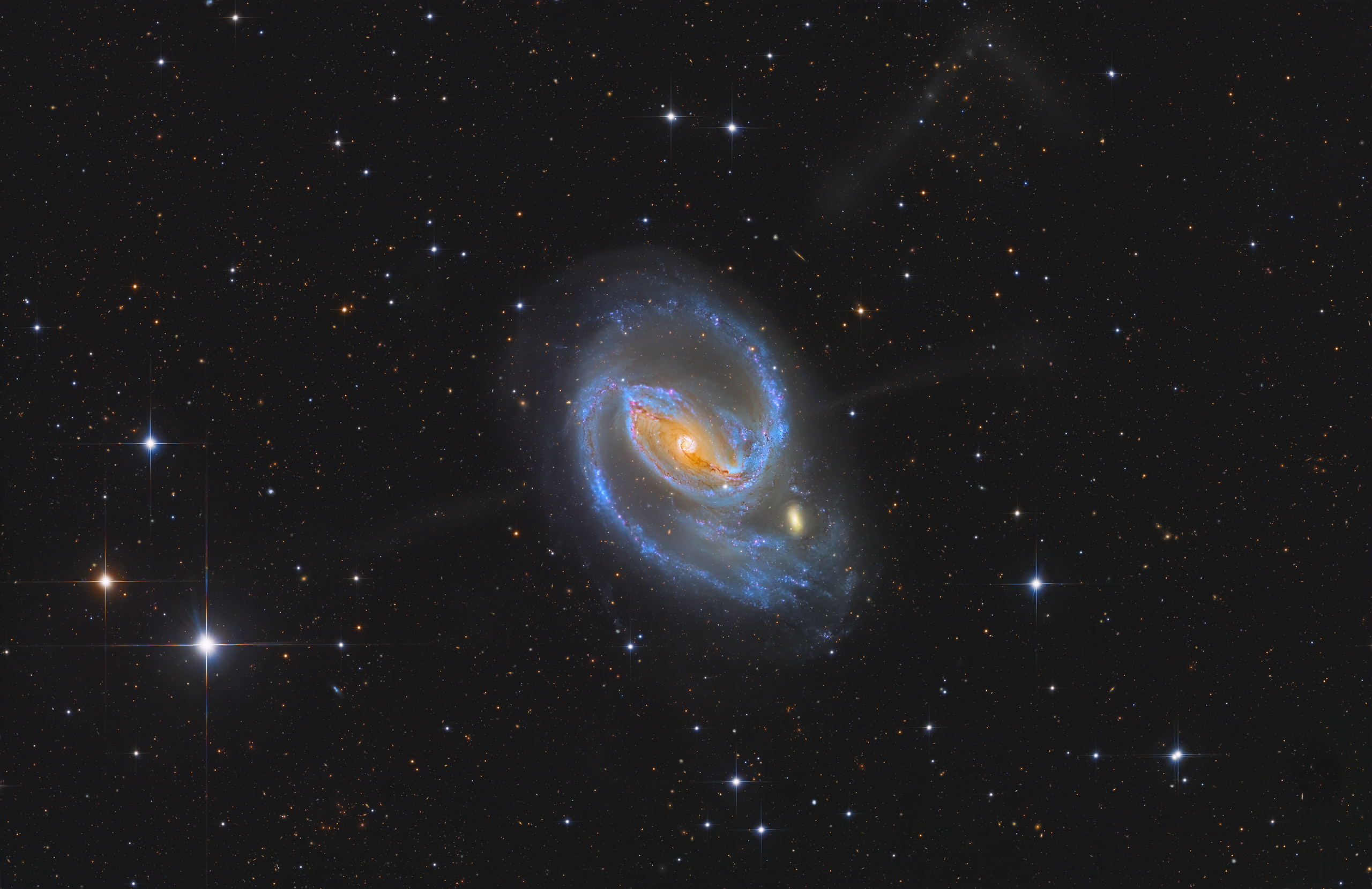
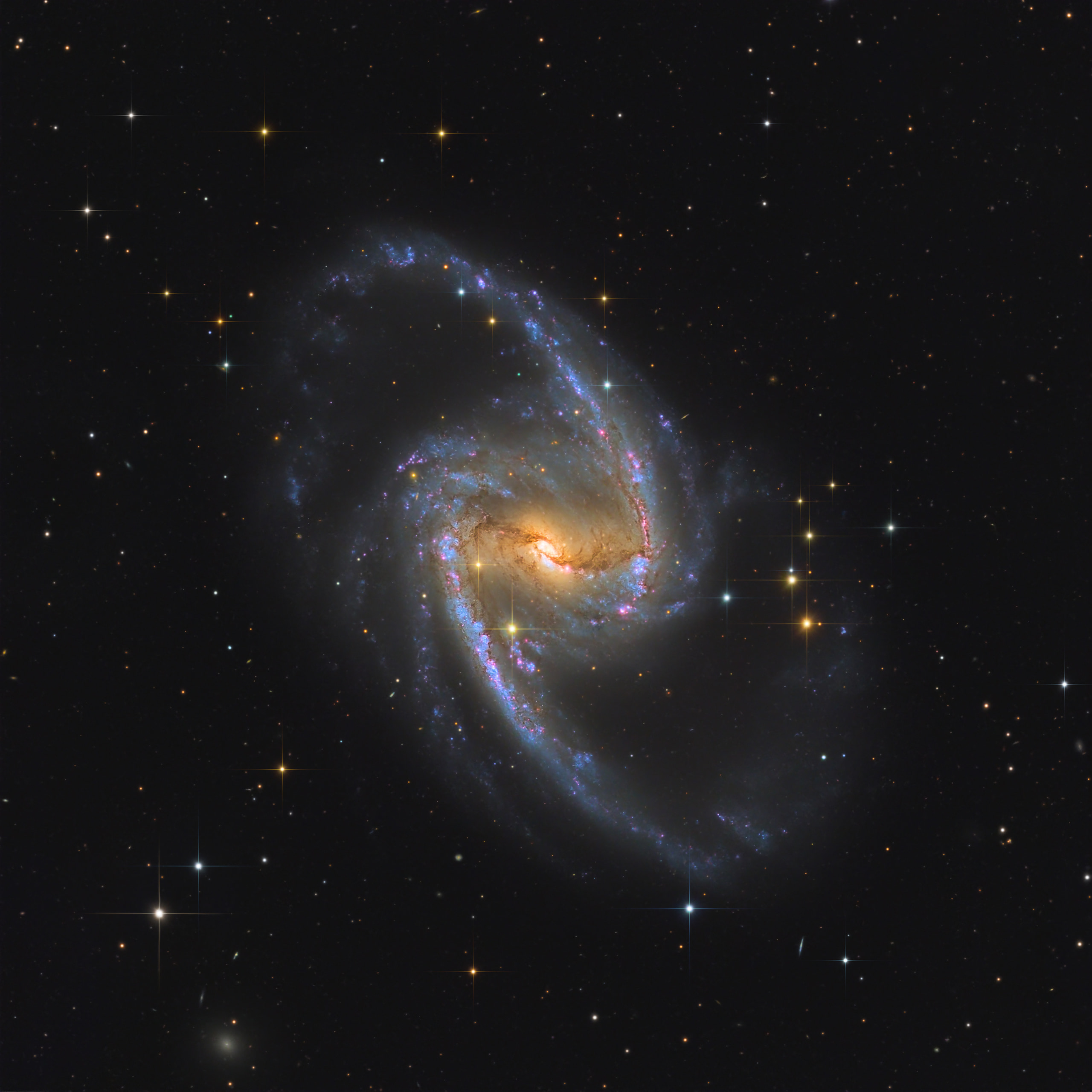
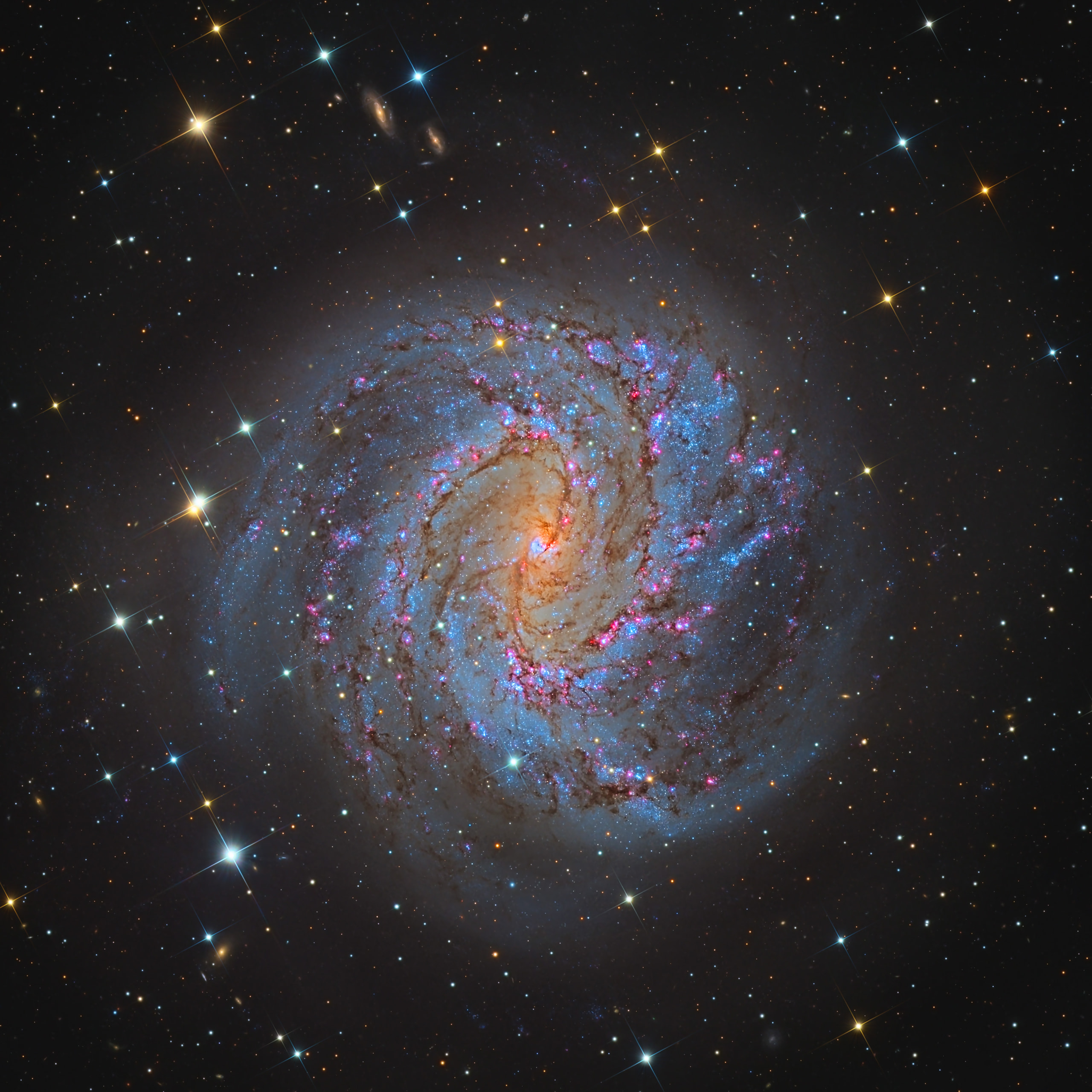
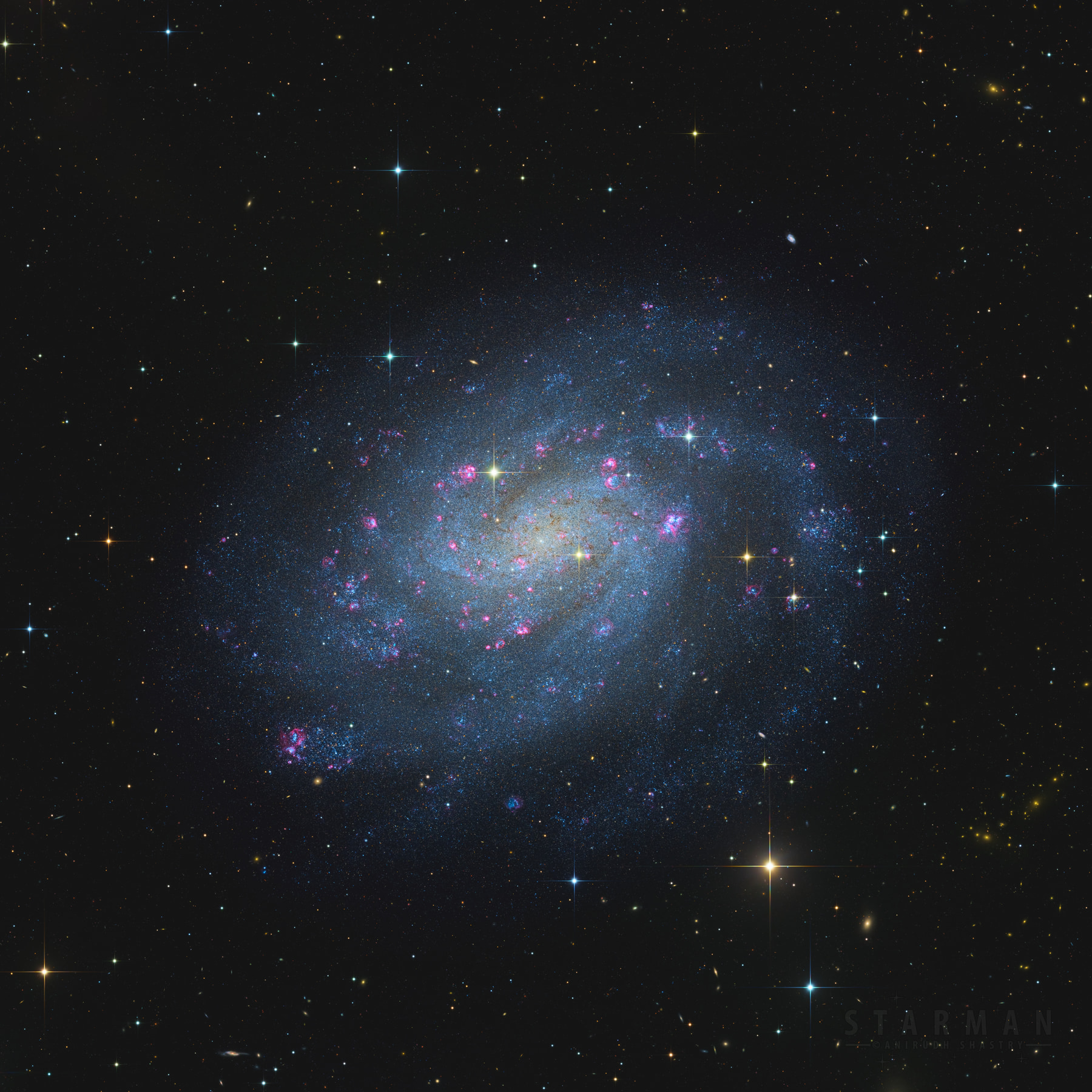
Six million years ago, around the time our earliest ancestors were learning to walk upright, this light left home. It crossed the gulf between galaxies in silence and ended its journey on a mirror in the Chilean desert. NGC 300, the Sculptor Pinwheel, is one of the nearest spirals beyond our Local Group, close enough that a telescope begins to resolve it into individual stars. What looks like blue mist in its arms is not mist at all. It is suns, countless and young, burning hot and impossibly far away.
James Dunlop swept it up in 1826 from Parramatta, Australia. It is a near twin of the Triangulum Galaxy: a loose spiral with no bulge, only a small golden core wrapped around a compact cluster of stars. Brown threads of dust wind through the center, and all along the arms the hydrogen data sets the disk alight. Each rose-pink knot is a stellar nursery, a cloud of glowing gas hollowed out by the newborn giants inside it. Somewhere in that glow, a black hole circles a dying Wolf-Rayet star every 33 hours, feeding on its wind.
Behind the Pinwheel, the darkness is crowded. Sculptor holds the south pole of our own galaxy, so here we look straight out of the Milky Way through its thinnest veil of stars and dust. Amber swarms of distant galaxies gather at the edges of the frame, each one an island of suns with its own long story.
This image holds 37.5 hours of light. The luminance carries the outer disk, which fades so gently that it is hard to say where the galaxy ends and the night begins. Astronomers have traced its stars far beyond what is visible here without finding a clear edge. To look at it is to feel very small and strangely at home: a quiet wheel of light, turning in the dark, still making stars.
Captured from my remote setup at Obstech in Chile:
🔭 PlaneWave CDK500 Observatory System
📸 Moravian C5A-100M Camera
🎨 Chroma L, R, G, B, and 3nm Ha Filters
📀 L: 69×600s, R: 67×300s, G: 84×300s, B: 69×300s, Ha: 23×1200s (37.5 hours)
🖥️ Processed in PixInsight and Adobe Photoshop